In a startup environment where quick iterations are the norm, does your branding reflect your startup’s true potential in 2026?
Truth is: Your MVP alone won’t win over investors. If your product screens and pitch deck look like they came from a quick ChatGPT prompt, it’ll be tough to gain traction and funding. But, most startups don’t have the time or resources to create an overwhelming brand identity that makes them seem like unicorns.
The sweet spot is investing just enough time, effort, and money in your brand to build value, trust, and a solid ROI. This sets you up for your next growth phase.
For early-stage startups, mastering the basics of branding is the first step toward success. In this post, we’ll cover how basic branding can significantly impact your startup.
Why is basic branding important for early-stage startups?
Think of your basic branding elements as the MVP of your brand, helping you move quickly and efficiently. When you build your MVP, you focus on functionality, but for a successful launch, reliability, usability, and design must also be prioritized. If you focus only on product features, you may overlook your brand’s visual appeal, which is just as crucial in attracting investors and users.
- Consistency: With a clear “single source of truth” for logo usage, color schemes, and fonts, your brand will present a unified, professional image.
- Sophistication: Consistent branding signals maturity and trustworthiness, allowing you to act confidently.
- Growth: A polished brand attracts users, prospects, and investors, helping your startup scale faster.
- More resources: A well-defined brand identity reduces stress, giving you more time to focus on product development.
How do you create a basic brand identity?
The good news? You don’t need to go through an exhaustive branding process.
A basic brand identity for early-stage startups is all about focusing on the core elements that help you attract users, talent, and investors, while also allowing your brand to evolve as your tech business grows. It strikes the balance between resource investment and brand values to position your startup as a professional market player, ultimately increasing ROI.
The foundational creative strategy
A strong brand identity doesn’t just come from slapping together a logo, colors, and fonts. It’s built on a creative strategy, which serves as the foundation of your brand identity. The strategy should consider your startup’s value proposition, industry, competitors, and brand personality.
This ensures that your branding stays on track and reflects your core values. It’s what guides your visual direction and helps define the attributes of your brand, whether bold, dynamic, or exclusive. With your creative strategy in place, the visual exploration begins.
The non-negotiable visual elements
Your tech startup’s logo: Recognizability and consistency
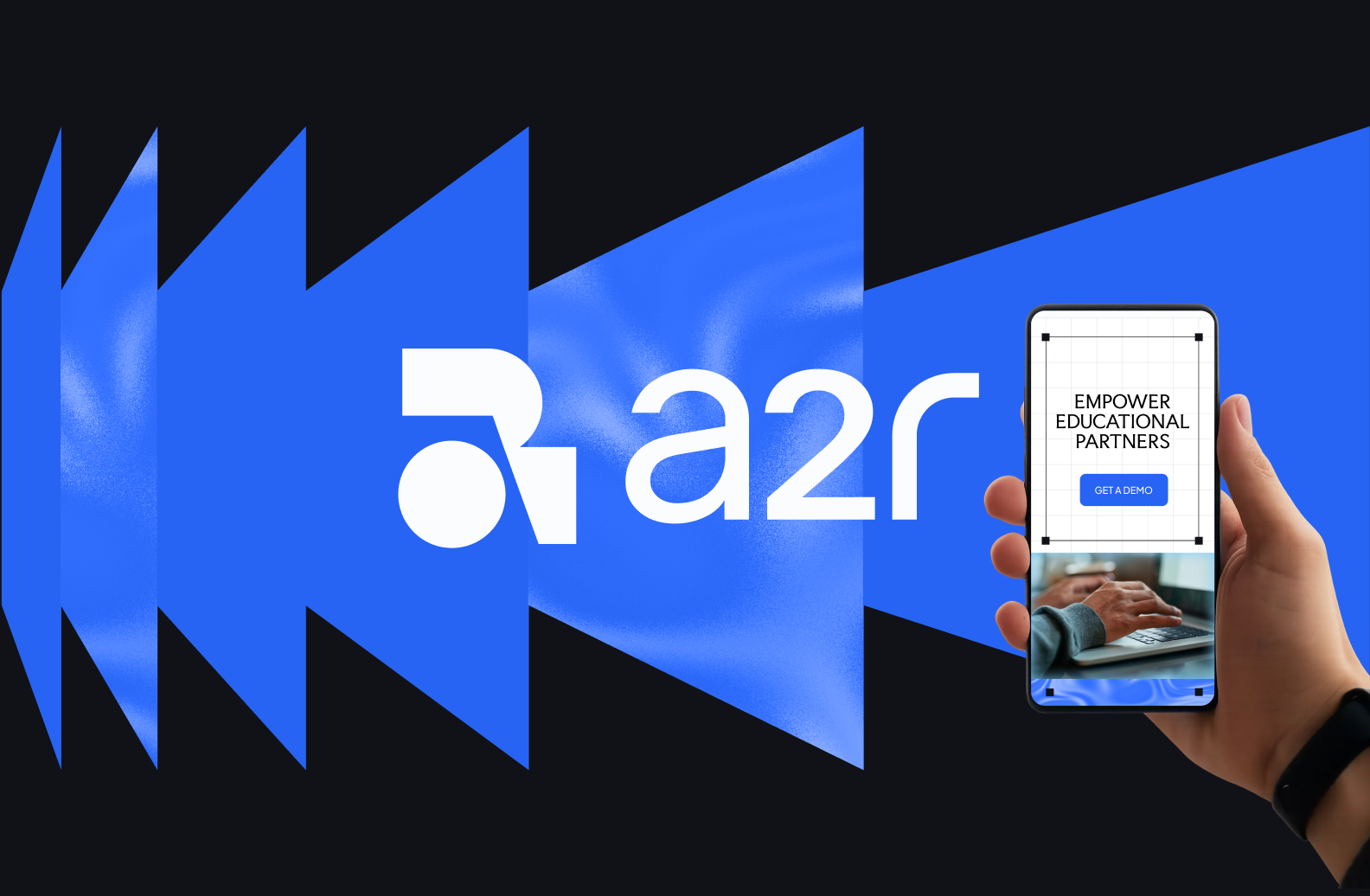
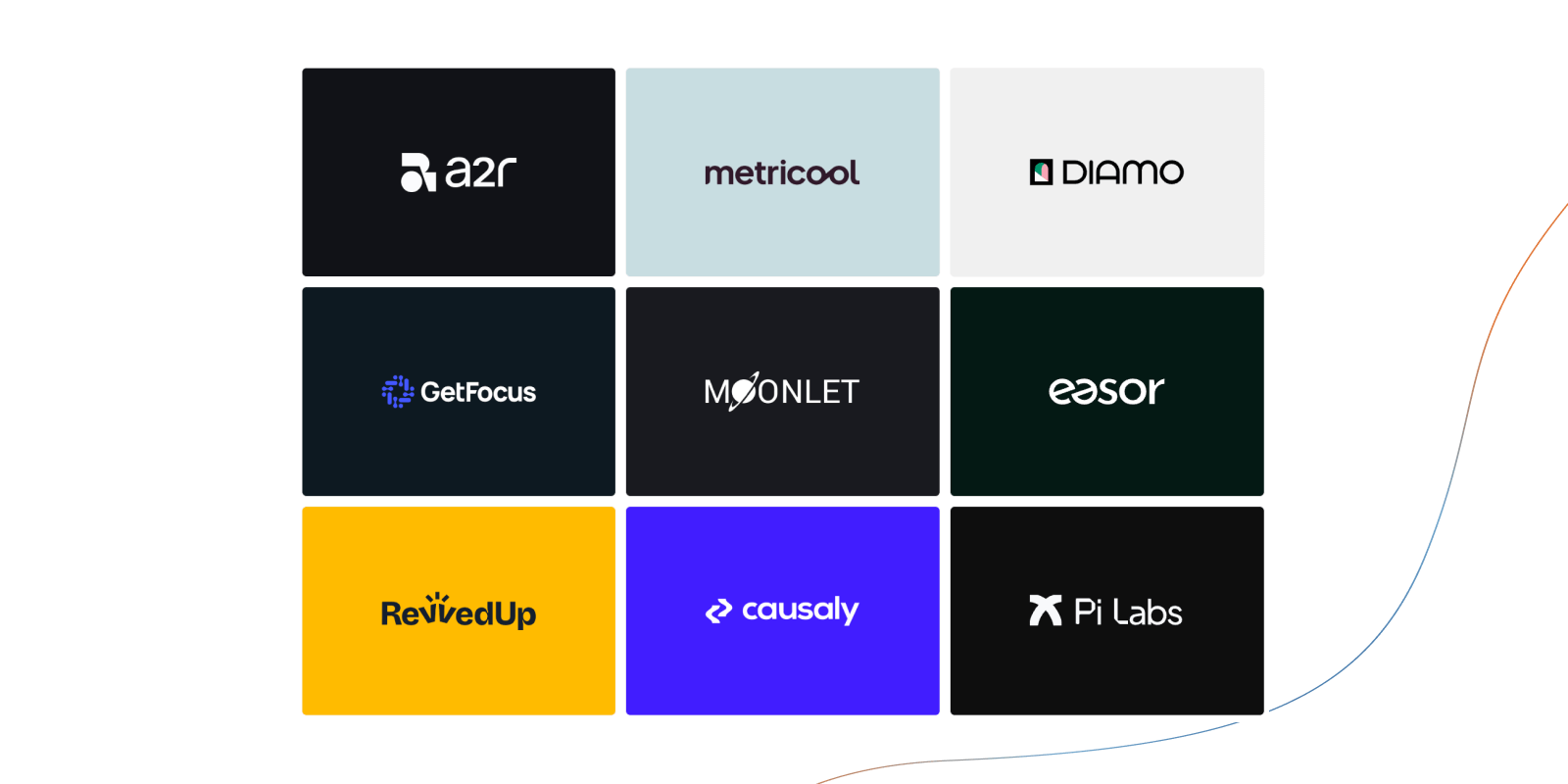
For many early-stage startups, a logotype consisting of an isotype (symbol) and wordmark (written name) is the perfect choice: Compare the logos of A2R, Diamo, GetFocus, Causaly, and Pi Labs below. The isotype works well for social media profiles, favicons, and app icons, while the full logo is great for websites, presentations, and merchandise.
Another option is an integrated logotype: a specific form of a combination mark where a letter within the brand name is replaced by a graphic or the symbol is seamlessly blended into the typography. See Moonlet and RevvedUp.
The wordmark alone can also be a great choice if you're building awareness for a new brand and want the name to do the branding work from day one. Especially when you want minimal variation between uses, a wordmark is a good choice for fast brand recall. See Metricool and Easor.
Need inspiration? Check out our comprehensive collection of tech startup logos.
Colors and fonts: More than just hex codes and san-serifs
When selecting colors, remember that they carry deep psychological meaning and should align with your brand’s personality. For example, bold yellow can evoke innovation and excitement.
Choosing the right typeface is crucial, especially when youre tech startup needs an UI design system. Legibility and digital adaptability should be priorities. You can use two complementary typefaces, one for headers and another for body text, to enhance readability and visual appeal.
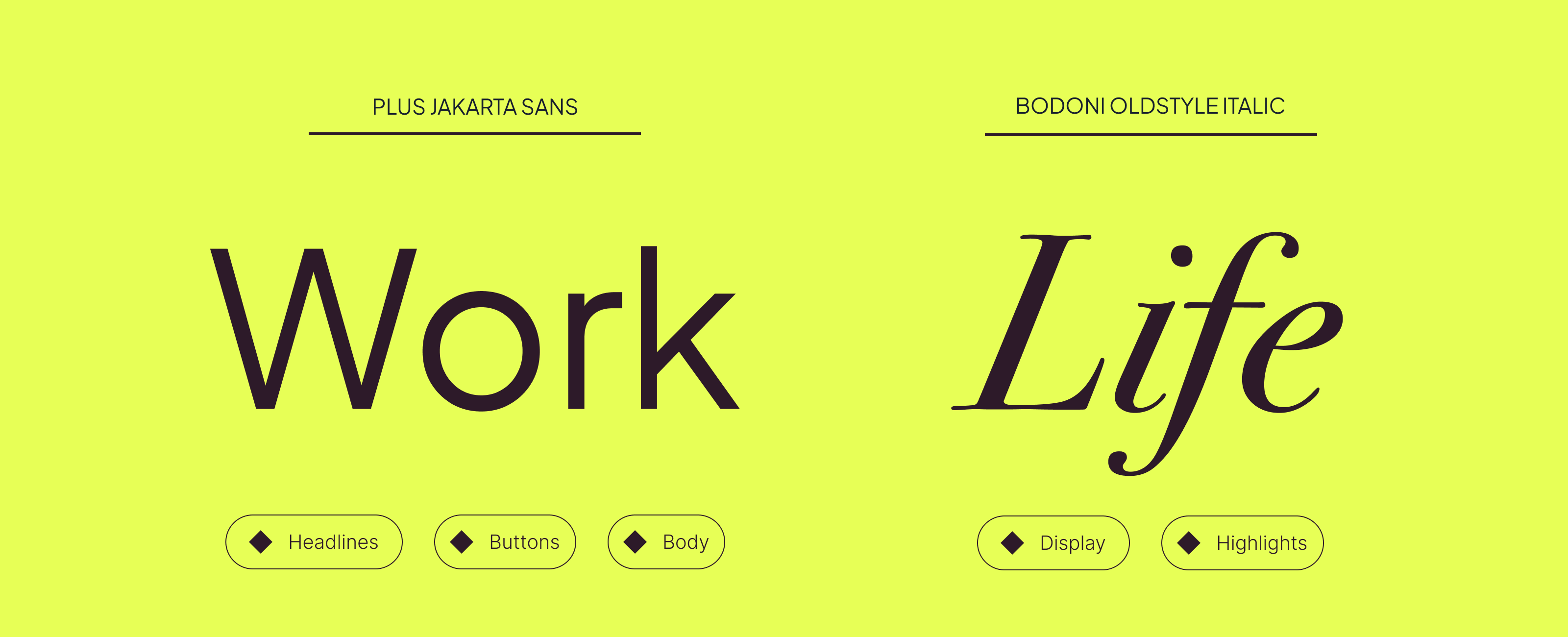
In the best startup brands, typography is more than just a functional ornament; it's part of the creative strategy: Metricool, for instance, uses two different fonts to communicate the balance between work and life. "Work" is represented with a a clear, straightforward sans-serif, while "Life" is a serif in italic, used for highlights and a playful touch.
Don’t be a Frankenstein: Brand application
When building your brand identity, think beyond just logos and fonts. You'll need comprehensive guidelines for illustration styles, imagery, and brand backgrounds to ensure a cohesive visual identity.
Avoid relying on generic tools like Canva for creating such elements. Custom illustrations and well-designed elements should seamlessly integrate across both digital and offline channels, elevating your brand’s presence and ensuring consitent brand application.
This is where senior-led design becomes crucial. Experienced designers provide more than just aesthetic elements: they create a detailed style guide, like we did for Diamo. This guide covers everything from typography to general brand usage, ensuring that your startup team can apply your brand consistently and beautifully across all touchpoints.
What are startup branding trends in 2026?
Back to human
In 2026, tech startups can leverage the "Back to Human" branding trend, which focuses on blending technology with human connection. Users expect AI to be seamlessly integrated into products but don't want it overtly emphasized. Over-promoting AI can even backfire, especially among users concerned about privacy. Instead of focusing on AI features, highlight how AI solves real problems and helps users achieve their goals.
Additionally, nostalgia in branding is on the rise, with subtle references to familiar tech patterns offering a sense of reliability while maintaining modern capabilities.
Emotional messaging
Purely transactional messaging no longer resonates with today’s consumers. People remember stories that evoke emotions, not just sales pitches. In the tech industry, where many companies share similar value propositions, emotional branding becomes a key differentiator. It transforms your product from a simple tool into a memorable experience. For tech startups, building a brand identity that connects on a human level fosters stronger brand recall, loyalty, and recognition, which goes far beyond the capabilities of just highlighting product features.
Explore more 2026 startup branding trends in this article.
As an early-stage startup, your branding can make or break your first impression. Building a strong, human-centered brand identity, grounded in a creative strategy, will help you stand out in the competitive tech space. Avoid generic tools and focus on creating something unique with senior-led design and a well-defined style guide.
Ready to kick-start your branding?
We help you create a brand that speaks to your audience and investors and sets your startup up for success.