2026 is shaping up to be a defining year for tech founders. Capital is becoming more selective, more strategic, and more execution-driven. What does this mean for startups and AI- or SaaS-driven companies?
Below are the key tech investment trends for 2026, with a focus on AI and government-backed innovation.
Before diving into what investors are funding this year, let’s have a look at what’s behind Germany’s VC fundraising high in 2025.
The core questions we answer in this article:
2025 tech investment highlight: Germany
According to PitchBook data, Germany captured a larger share of Europe’s venture capital than the UK in 2025 for the first time in history.
VC investment reached €2.1 billion across 158 deals in Q4, with rising deal value offsetting a lower deal count. Late-stage and AI-driven companies led activity, with large rounds for Tubulis, Black Forest Labs, Quantum Systems, and n8n.
These deals signal continued funding for mature, execution-ready startups.
Full-year private equity activity climbed to €74.7 billion, driven by large transactions such as Carlyle and QIA’s €7.7 billion carveout of BASF’s coatings business.
Part of Germany’s rise is structural. Its Limited Partner base is more concentrated in public and quasi-public institutions, which tend to invest with longer time horizons and less sensitivity to short-term market cycles.
With easing inflation and the launch of the €30 billion “Deutschlandfonds”, momentum is expected to continue in 2026. The fund is designed to mobilize private capital into energy transition, technology, and industrial modernization.
This matters for founders. It shows that government-backed capital and policy alignment are becoming decisive factors in where startups get funded, especially in Europe.1
2026: Tech sovereignty becomes a core investment theme in Europe
Europe’s reliance on US and Asian technology, which accounts for nearly 80% of its digital infrastructure, is increasingly seen as a strategic risk and Europe’s Achilles’ heel.
As a result, tech sovereignty is emerging as one of the dominating keywords of 2026. Governments are no longer just regulators. They are becoming customers, partners, and capital providers.2
At the same time, the European Investment Bank (EIB) Group expanded theEuropean Tech Champions Initiative(ETCI) to support both mega-funds and mid-sized funds. Since its launch in 2023, the program has already supported nine tech unicorns.3
For founders, this signals a shift.
Building startups in Europe now increasingly means building for strategic relevance, not just market demand.
State of European tech: Digital independence and Deep Tech
Despite ongoing concerns about regulation, European founders are starting to see governments as a new ally rather than a barrier. Against global uncertainties and the rising worries about dependencies on US and Asian technologies, political momentum is growing and opportunities for tech companies are taking shape.
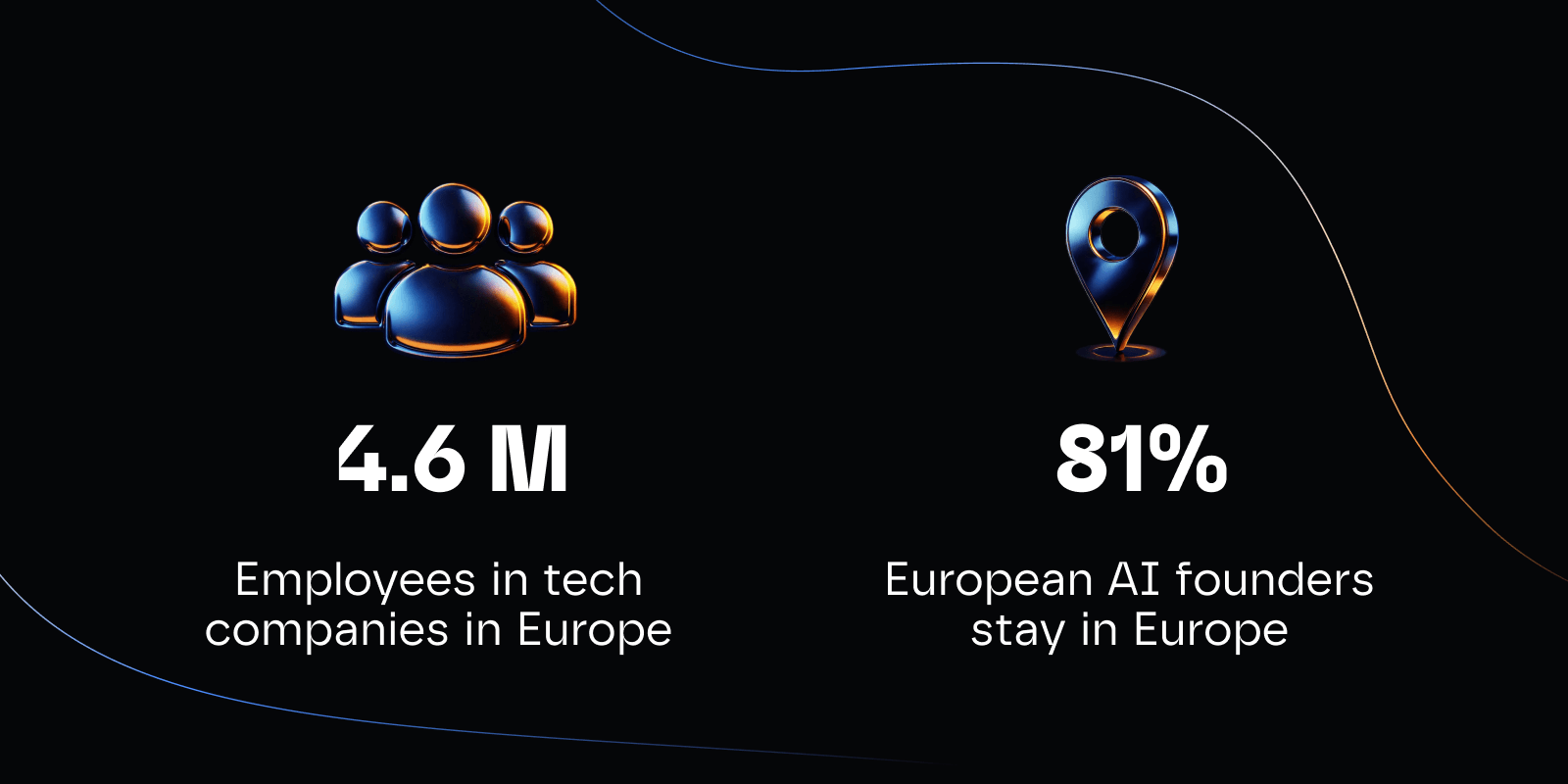
Europe now employs 4.6 million people in venture-backed companies, with its tech workforce growing faster than in the US. A new generation of technical founders is translating research into commercial companies across semiconductors, robotics, and dual-use defense systems.
Key signals:
- 81% of European AI founders stay in Europe
- Deep Tech accounts for 36% of all European VC funding
- In sustainability and climate tech, Europe leads with 18% of its venture capital directed toward climate innovation.4
At the same time, quantum, AI, and defence are powering a new era of European strategic independence.
Is Europe Quantum’s Silicon Valley?
Quantum technology is emerging as a cornerstone of Europe’s long-term digital independence. According to the OECD, 18 OECD member countries plus the EU have now adopted dedicated national quantum strategies. International quantum patent families grew sevenfold between 2005 and 2024: a 20% compound annual growth rate, compared to just 2% for all technologies combined.
Quantum matters because it intersects with:
- Secure communications
- Encryption
- Energy systems
- Drug discovery
- National security
Unlike consumer software, quantum requires decades of investment, shared infrastructure, and rare scientific talent. For nations, it is about sovereignty and resilience, not short-term returns.
For founders, quantum illustrates where deep tech and public capital intersect.5
Defense Tech expected to rise
As geopolitical tensions across the globe persist, government investment in defense tech continues to increase. The European Investment Bank plans to invest €4.5 billion in defense projects in 2026, up from €3.5 billion in 2025. This reinforces procurement pathways and reduces demand risk for startups operating across civilian and defense markets.6
2026's AI investment trends
Artificial intelligence will continue to be the strongest driver of innovation investment trends in 2026, but with a key shift: real utility replaces hype. We can expect funding move towards AI-native companies as well as agentic and vertically integrated AI models.
US: The AI gap
In the US, funding is increasingly concentrated in AI-native startups, agentic AI, and vertically integrated models. Execution now matters more than raw model capability.
US data highlights this gap:
- AI startups receive their first funding round 65% faster than non-AI startups.
- The time between funding rounds is shortening for AI startups, while growing for non-AI startups.
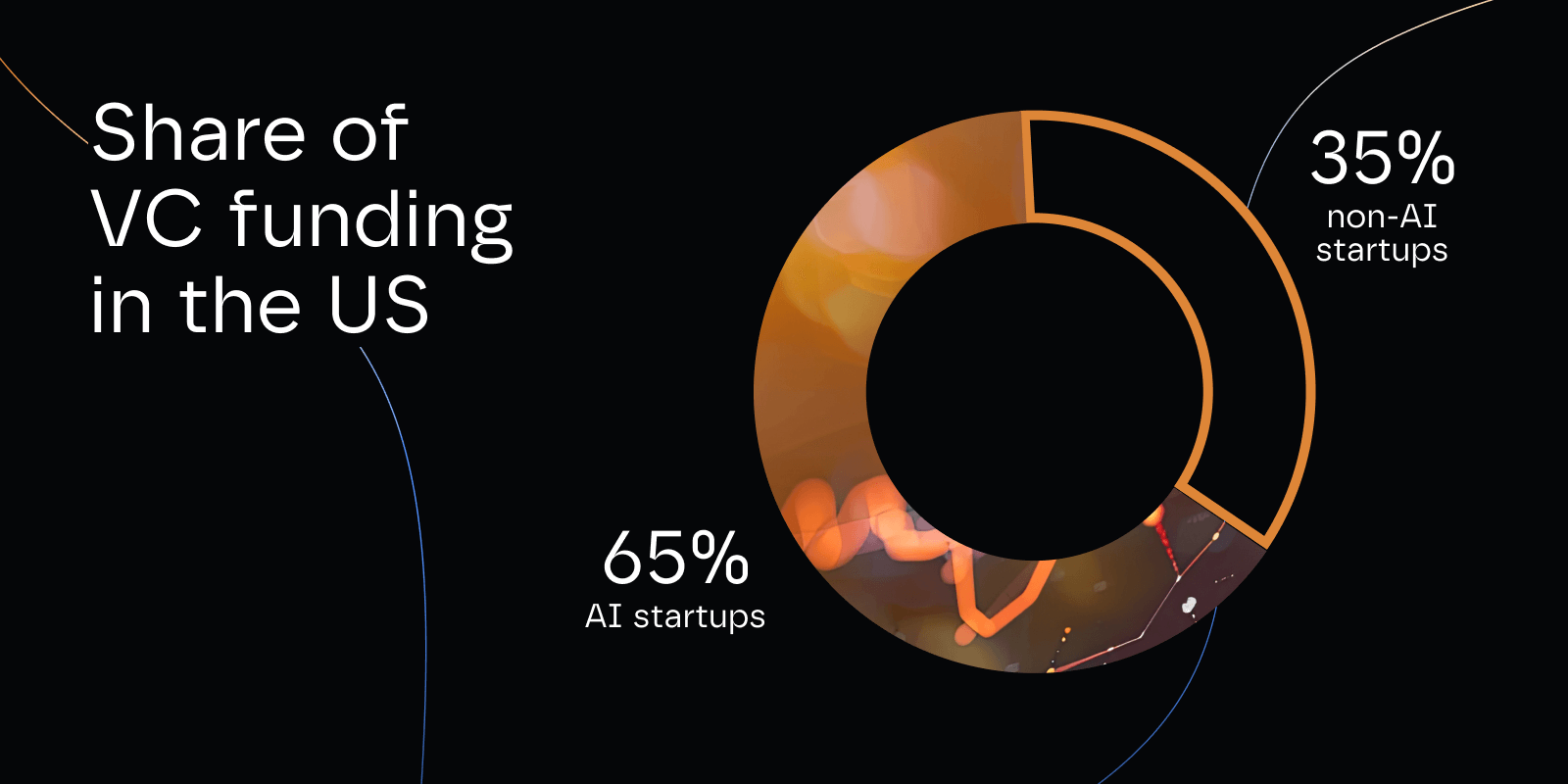
- The share of the total deal value for AI startups in the US YTD was 65% versus 35% for non-AI startups.7
Europe is responding with its own AI sovereignty push.
Europe: Governments preparing the AI sector for growth
In January 2026, the European Commission allocated €307.3 million under Horizon Europe to strengthen AI and digital competitiveness.
- €221.8 million targets trustworthy AI, data services, and strategic autonomy
- €85.5 million supports next-gen AI agents, robotics, and advanced sensing materials
With this investment, the Commission aims to secure leadership in strategic technologies through sustainable, human-centric European innovation.8
Canada: More AI sovereignty
Canada is following a similar path by funding sovereign, large-scale AI data centers, reinforcing the global trend toward domestic AI infrastructure. The government announced a call for proposals to help develop sovereign, large-scale AI data centers exceeding 100 megawatts.
Such data centers are “the backbone of modern digital infrastructure and critical to (a country’s) competitiveness across sectors, including health care and manufacturing”.9
From experiment to execution: Why AI-native startups with proprietary data win
The defining theme of AI startup trends 2026 is simple: deployment over discovery.
Most AI capabilities already exist. The bottleneck is execution inside real organizations. Leading use cases include medical diagnostics, industrial optimization, legal automation, and corporate knowledge systems. This leads to increasing investment in AI-native companies that specialize in AI execution.
According to the consulting firm West Monroe, capital in 2026 flows toward full-stack AI-native companies and businesses with proprietary data advantages.
These startups:
- Capture existing enterprise IT budgets
- Operate with smaller teams and higher leverage
- Replace seat-based SaaS with outcome-driven models
As AI models become commoditized, proprietary data has become the key advantage. Startups with unique datasets can offer more personalized results, making them harder to replace and more valuable to buyers.10
AI in Health Tech: Funding for a new generation
Healthcare is becoming one of the strongest AI-native categories.
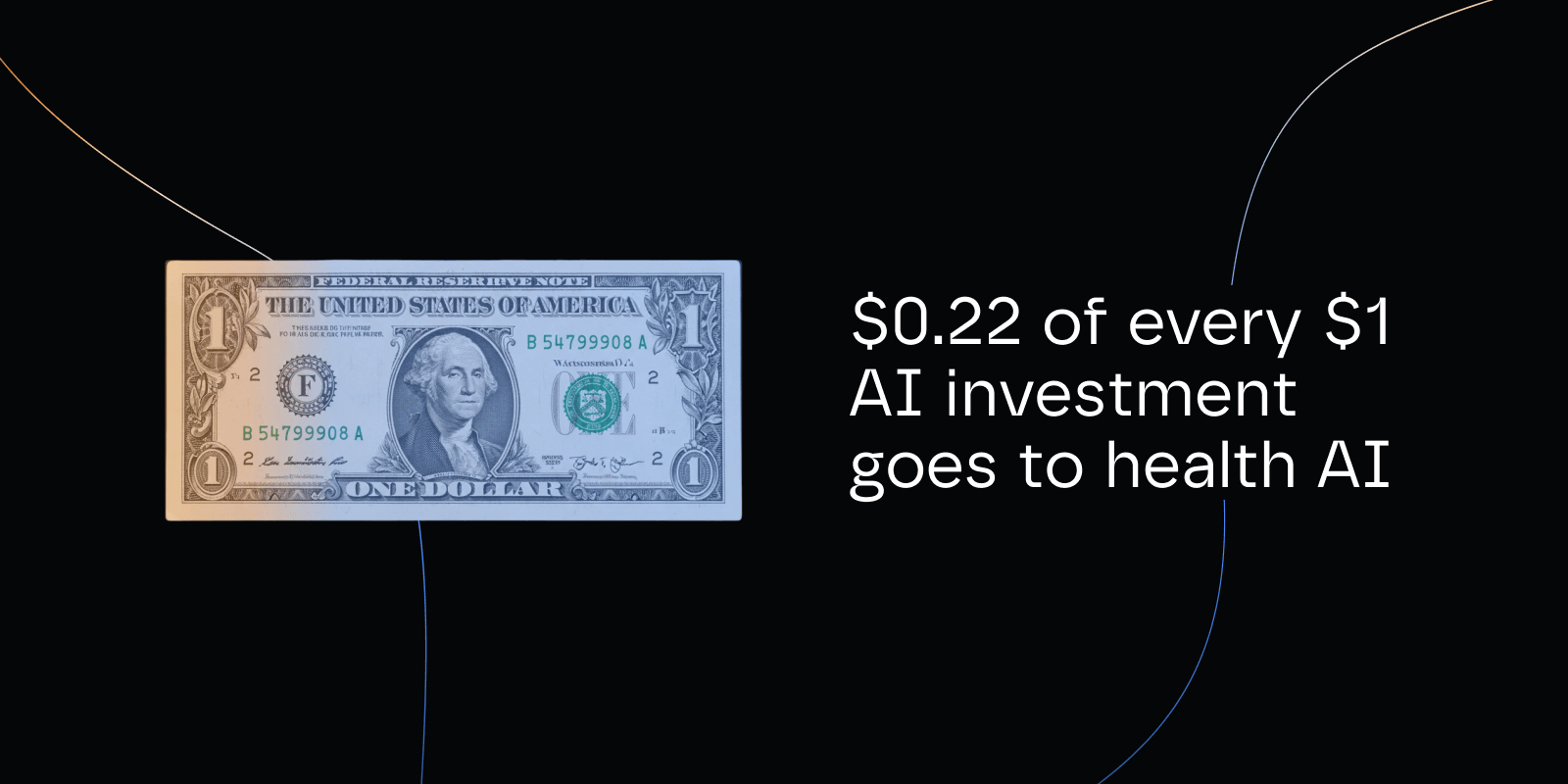
By 2025, AI startups captured 55% of all health tech funding, up from 29% in 2022. For every $1 invested in AI, $0.22 flowed into healthcare AI, exceeding healthcare’s GDP share.
Bessemer Venture Partners predicts “a new generation of health tech companies” with faster growth, stronger unit economics, and compressed time-to-scale, especially in drug discovery and research. The firm sees a major opportunity for founders and investors.11
Key takeaways for 2026’s tech founders
- Funding is more selective in 2026. Capital flows to startups that show execution, defensibility, and real-world deployment.
- Europe is gaining strategic importance. Government-backed capital and long-term LP structures are strengthening the European startup ecosystem, with Germany leading.
- Tech sovereignty is now an investment driver. AI, quantum, defense, and digital infrastructure are funded as strategic assets, not optional tools.
- Deep tech is moving into the mainstream. It now accounts for a significant share of European VC funding.
- AI investment has shifted from hype to execution. AI-native and agentic startups that deliver measurable outcomes attract capital.
- Proprietary data is the key moat. Unique datasets drive differentiation, pricing power, and higher valuations.
- Healthcare and infrastructure stand out. AI-native health tech and specialized infrastructure continue to draw strong investor interest.
- 2026 is a selection cycle for founders. The startups that get funded are built for long-term relevance, not just speed.
Sources and further reading:
1https://pitchbook.com/news/reports/q4-2025-germany-market-snapshot, https://pitchbook.com/news/articles/why-germany-has-bucked-europes-vc-fundraising-pullback, https://www.reuters.com/sustainability/climate-energy/germany-launches-30-billion-fund-mobilize-private-investment-2025-12-18
2https://www.youtube.com/watch?v=pwdP_d-a74A
4https://capital-riesgo.es/en/articles/state-of-european-tech-2025-report-europe-faces-a-decisive-decade-to-define-its-technological-leadership, https://www.orrick.com/en/Insights/2025/11/State-of-European-Tech-2025-A-Word-from-Orrick
5https://heartcore.substack.com/p/heartcore-on-quantum
6https://gohub.vc/vc-investment-trends-2026
7https://investgame.net/wp-content/uploads/2026/01/2026-01-12-2026-us-venture-capital-outlook.pdf
10https://www.westmonroe.com/insights/software-outlook, https://startupvalencia.org/innovation-investment-trends-2026