Brand universes
Every case study on our site opens inside a small world built for that brand, one you can poke, drag and play with. Why we make them, and how seven of them work.
A logo on a white page tells you who a company is. It doesn’t tell you how it feels to be around it.
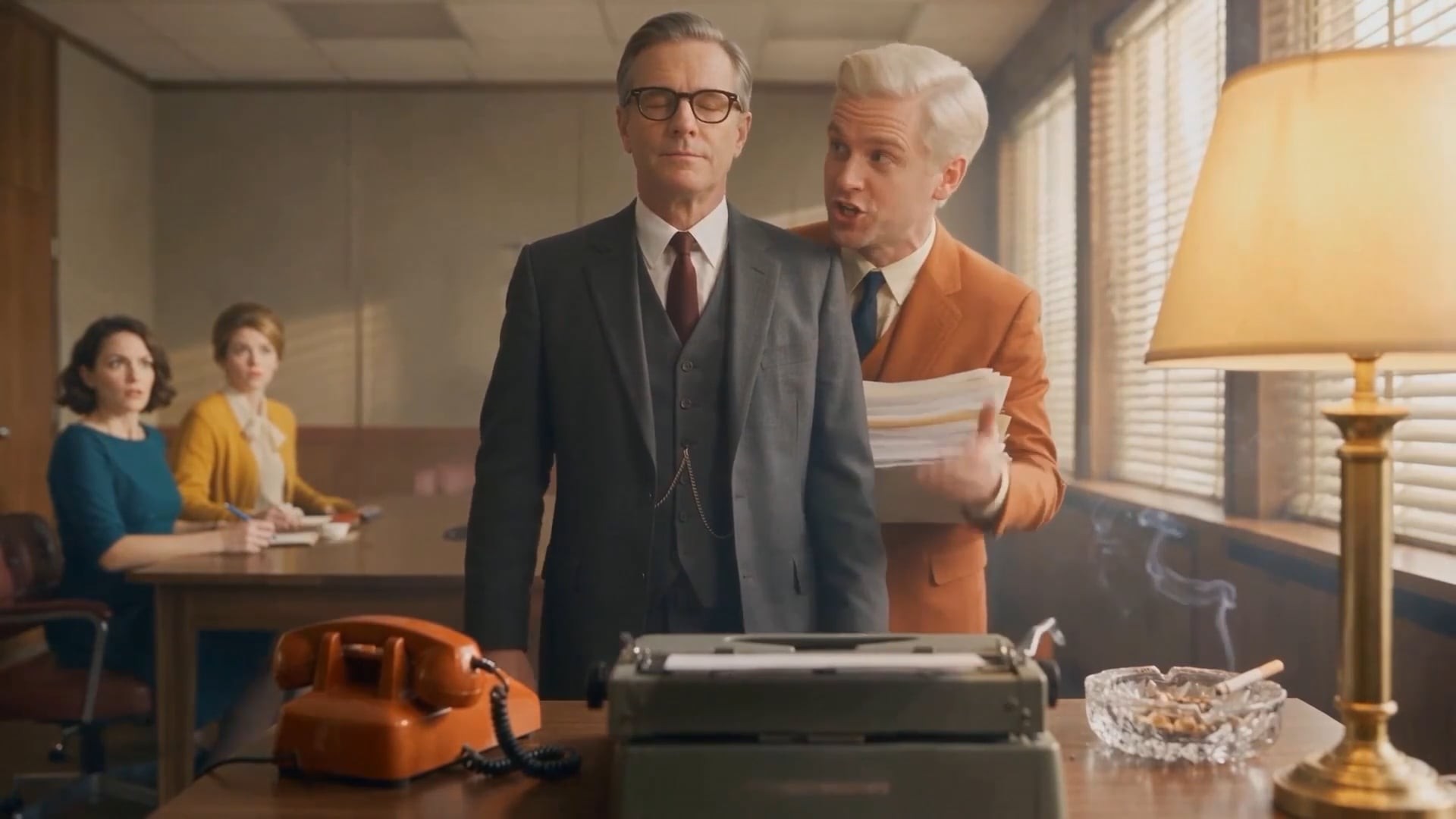
So when we rebuilt our website, we gave every case study its own small universe: a full-screen backdrop behind the logo, coded from the brand’s own colors, shapes and ideas. It moves on its own, and it answers when you touch it. The slider above is our home page doing exactly that, one brand after another. Move your cursor over it. Press. Drag.
Why a universe, not a hero image
The usual case study opens with a mockup on a gradient. It proves the work exists, and says nothing about what the brand is. But an identity isn’t a picture. It is a set of decisions about character: how bold, how calm, how playful, how precise. A backdrop lets those decisions behave.
We gave ourselves five rules:
- Start from the idea, not from an effect. Every universe is a metaphor for what the company does. If we can’t explain the metaphor in one sentence, it doesn’t ship.
- Only the brand’s own material. Its palette, its shapes, its mark. No stock textures, no generic particles.
- It lives on its own. An entrance, then a quiet loop that never steals the stage from the logo.
- It answers you. Something you can play with for ten seconds is something you remember, and the interaction should say something about the brand too.
- It knows when to stop. Calm around the logo and the text, a single still frame for anyone who prefers reduced motion, and a pause the moment it scrolls out of view.
How they are made
Each universe is one self-contained HTML file: six of them draw on a 2D canvas, one is built from CSS 3D. No WebGL, no libraries. It runs in an isolated frame behind the logo, with no access to the page around it, and the page passes the cursor in. That way a backdrop can never steal a click, block a scroll or break the case study it sits under.
Every one started as a brief from our design team: what the brand stands for, how it should feel, and what it should do under your hand. Claude wrote the code, and we went back and forth, frame by frame, until it felt like the brand and not like a demo. The decisions stayed with us. The speed came from AI, which is the only reason we could make one for every case instead of three for the showreel.
Seven universes
These are live, the same code that runs on each case study. Play with them.
Featherless
Featherless lets teams deploy any open-source language model without managing servers. Its universe is an origami figure folded from paper triangles in Featherless yellow, turning slowly in mid-air with paper grain on every facet and a soft shadow underneath. Grab it and it spins like a trackball, keeps the momentum of your fling, then drifts back to its idle turn. Lightness, made out of something folded.
Eluviant
Eluviant’s AI watches security camera feeds and cuts the false alarms that flood a control room. The backdrop is that feed: slanted tiles flickering like video noise, green streaks running through them, and a detection frame that jumps from spot to spot. Inside the frame, the noise resolves into clean brand green. Move your cursor and the frame follows you, snapping to the grid; stop, and it goes back to searching on its own. The product, in one gesture: finding the signal in the noise.
Letsgo
Letsgo is a marketplace for physical collectibles. Its universe is a graded card sealed in a glass slab, which bursts into shards when it lands. The slab tilts toward your cursor while the glare slides across it, and the shards float around it in parallax. Press on one and it lifts toward you; drag it and drop it wherever you like. It is the small thrill every collector knows: the object, in your hands, under the light.
Metricool
Metricool brings every social channel, metric and post into one place. Its backdrop starts by drawing a thick yellow racetrack in three seconds, and then hands you the pen: press and drag to paint a pink ribbon of rays that follows your hand, spaced along the curve so they never collide. Six seconds after you stop, it fades away. Growth, as a line you draw yourself. On a phone held upright it becomes a still artwork, so scrolling stays scrolling.
SolveAI
SolveAI lets companies build enterprise software by describing what they need. The universe is a stage: a lilac sky over a white floor, a perspective grid gliding toward you, and the brand’s own moon and clouds sliding into place while purple sparkles pop in. Your cursor moves the vanishing point, and everything shifts by its depth. A calm, open place where things get built just by asking.
Moonlet
Moonlet runs staking and blockchain infrastructure for institutions. Its backdrop is a field of dots, and the larger ones trace the brand mark: a planet and its tilted ring. Every five and a half seconds a ripple leaves the centre and swells the dots it passes. Under your cursor, they grow and turn cyan, fast to light up and slow to fade, like nodes of a network answering a request.
Causaly
Causaly helps life sciences teams find cause and effect in the world’s research. Sixteen strands hang from the top of the frame, swaying like threads in water, each one ending in a node, and the crimson nodes send out a ripple every few seconds. Bring your cursor close and the nodes are pushed away, glow blue and grow, then spring slowly back. A dendrogram you can touch: every effect connected to a cause.
Bring the brand to life
An image shows a brand. A universe lets you meet it. When a case study opens on something that moves, reacts and changes under your hand, you don’t only see the colors and the logo: you feel the character behind them, in a few seconds and before reading a word.
People rarely remember a hero image. They remember how something made them feel. Giving a brand life, instead of a picture, is how we make sure that feeling arrives first.