

The decision, 1962
Five experts can’t pick a brand color, so they ask Andy. He delivers fifteen logos, a mascot and a jingle nobody asked for. A short comedy about who gets to decide what a brand is.
Every brand you love is the sum of hundreds of micro-decisions, each one discussed, challenged and finally made by people who know their craft. Somebody wanted blue. Somebody wanted the opposite of blue. Somebody had a deadline. And eventually, someone who would have to stand behind it said: this one.
The decision, 1962 is a ninety-second comedy about that moment, and about what happens when a team tries to skip it. Five people can’t agree on a color, so they call in the new hire who never says no. His name is Andy and he is an AI assistant who is very eager to help.
Five people, five strategies
Everyone in the room is defending a real, valid point of view. That is exactly why they can’t agree.
Harold, the boss
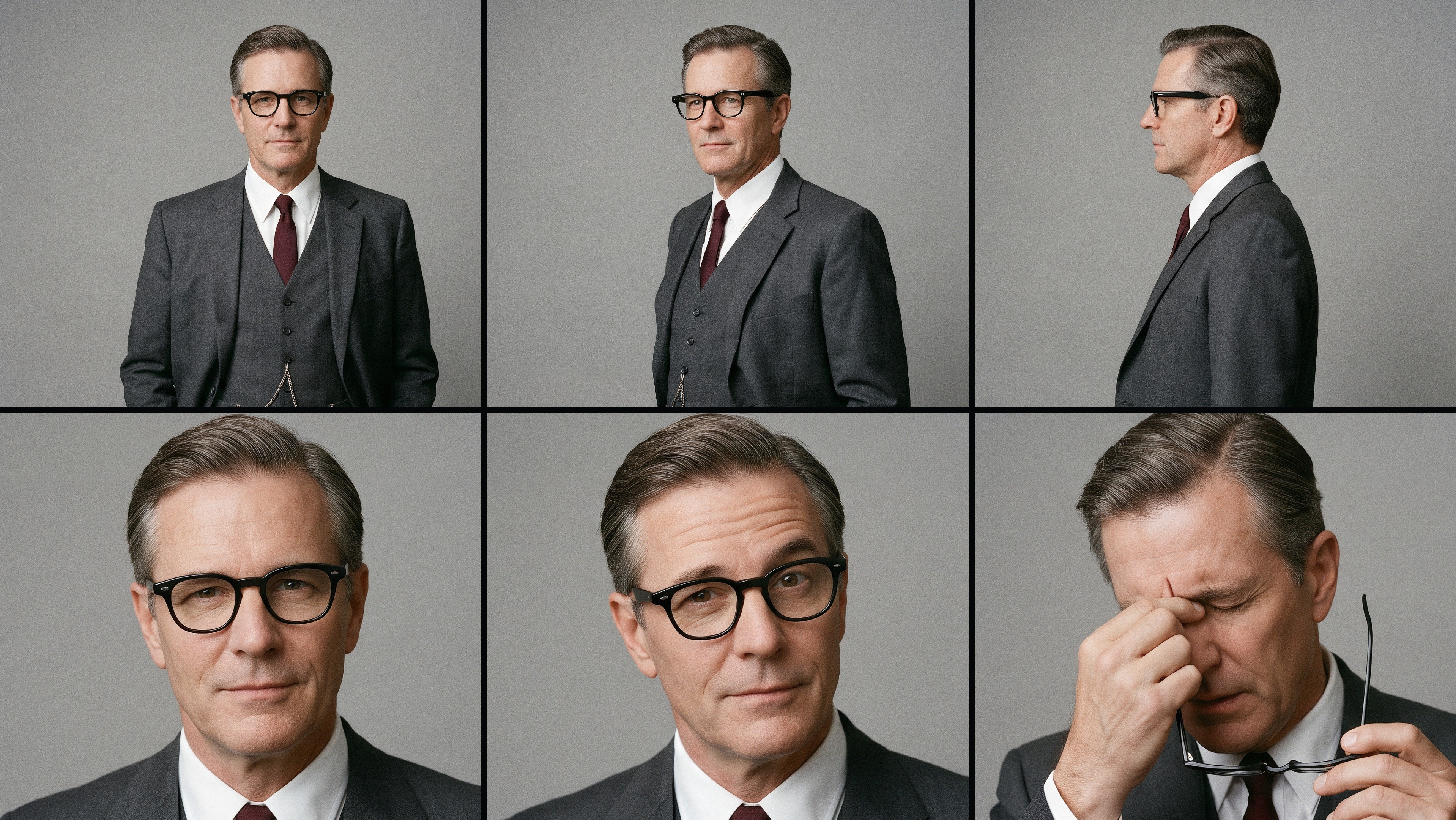
He isn’t looking for another opinion. He wants a decision he can put his name to, along with the responsibility that comes with it.
Dot, the strategist
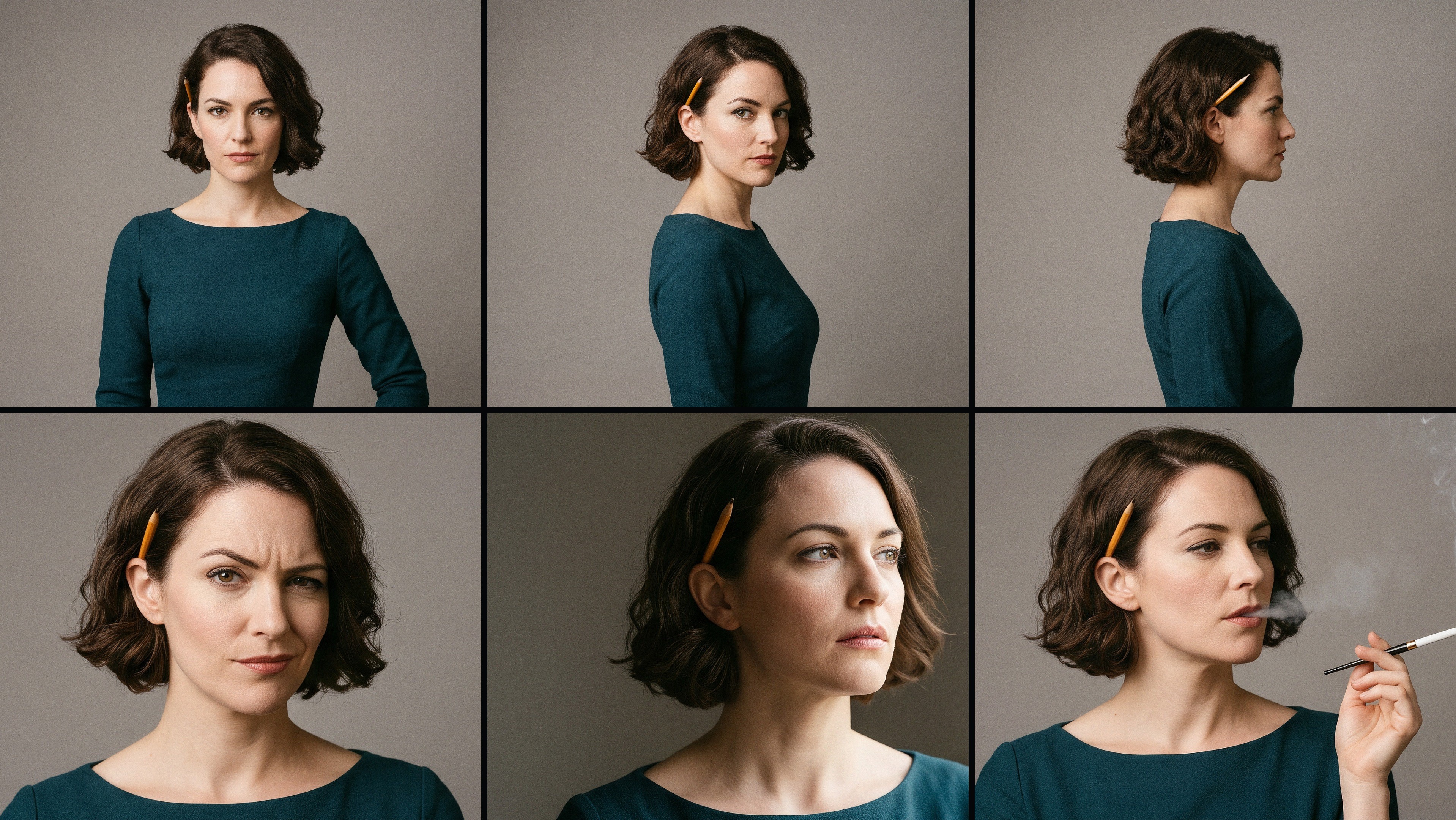
Dot is the empathetic one in the room. She thinks about the customer first: who they are, what they need and how the brand should make them feel. For her, terracotta is the warmer, more human choice.
Eddie, playing it safe
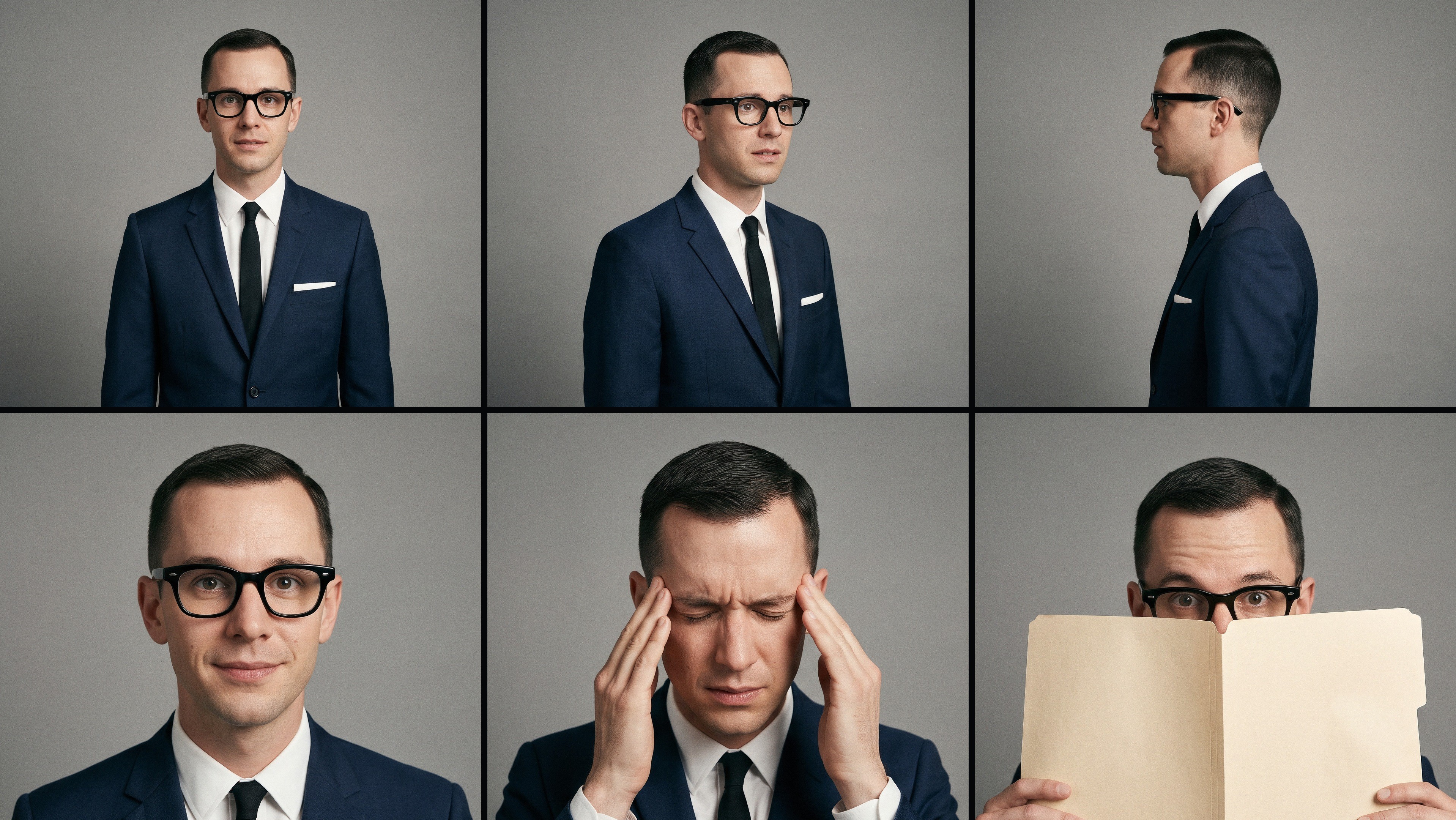
Eddie looks at what already works in the category. His view is more traditional: tech companies are blue for a reason, and the market has proven it. Blue is the safe bet.
Frank, the difference
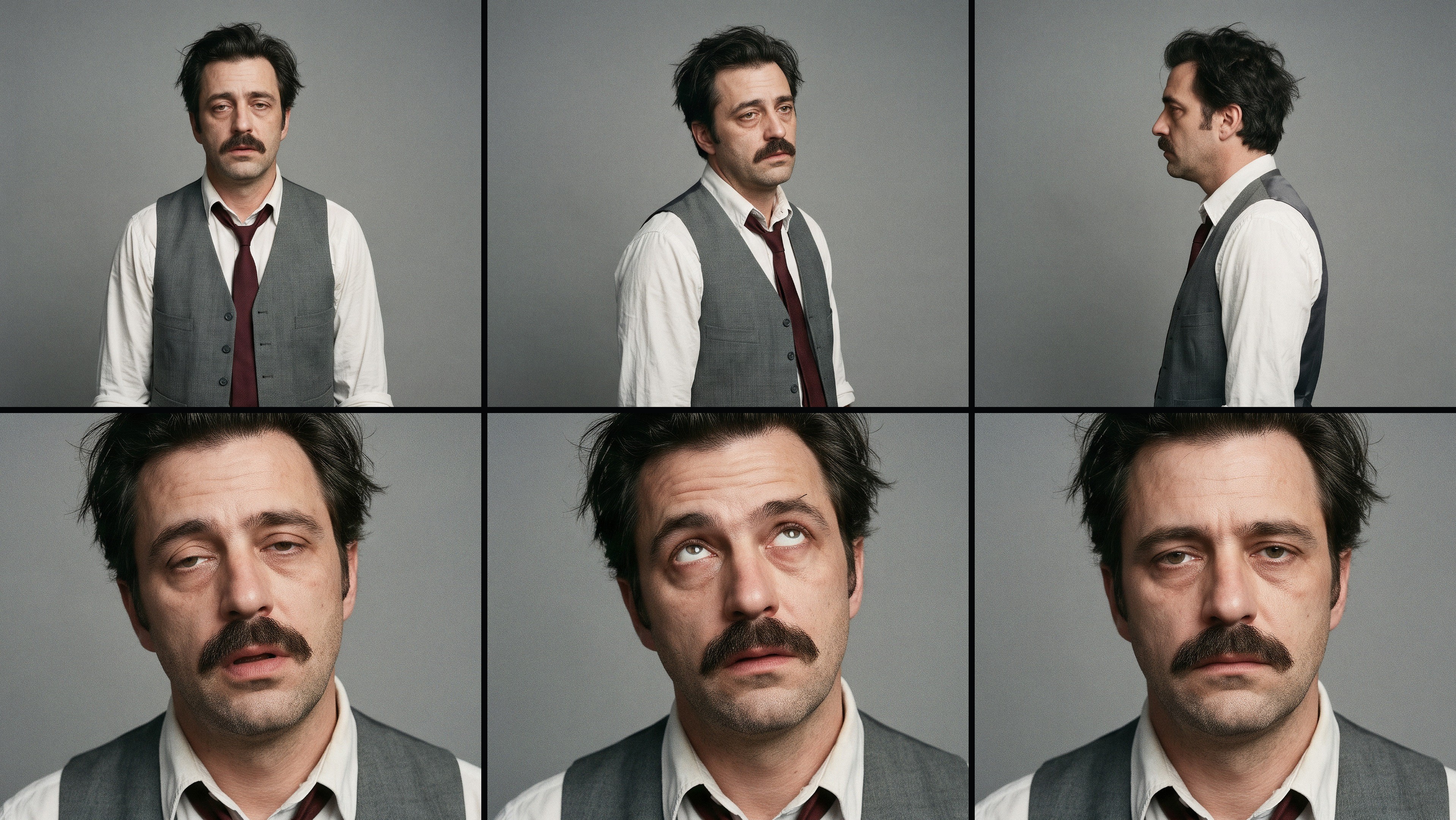
The creative director hears Eddie’s reason and turns it inside out: “Which is exactly why they shouldn’t be.” If every competitor is blue, blue makes you invisible. Frank is annoying, contrarian and usually right, which is the job description.
Marjorie, the clock
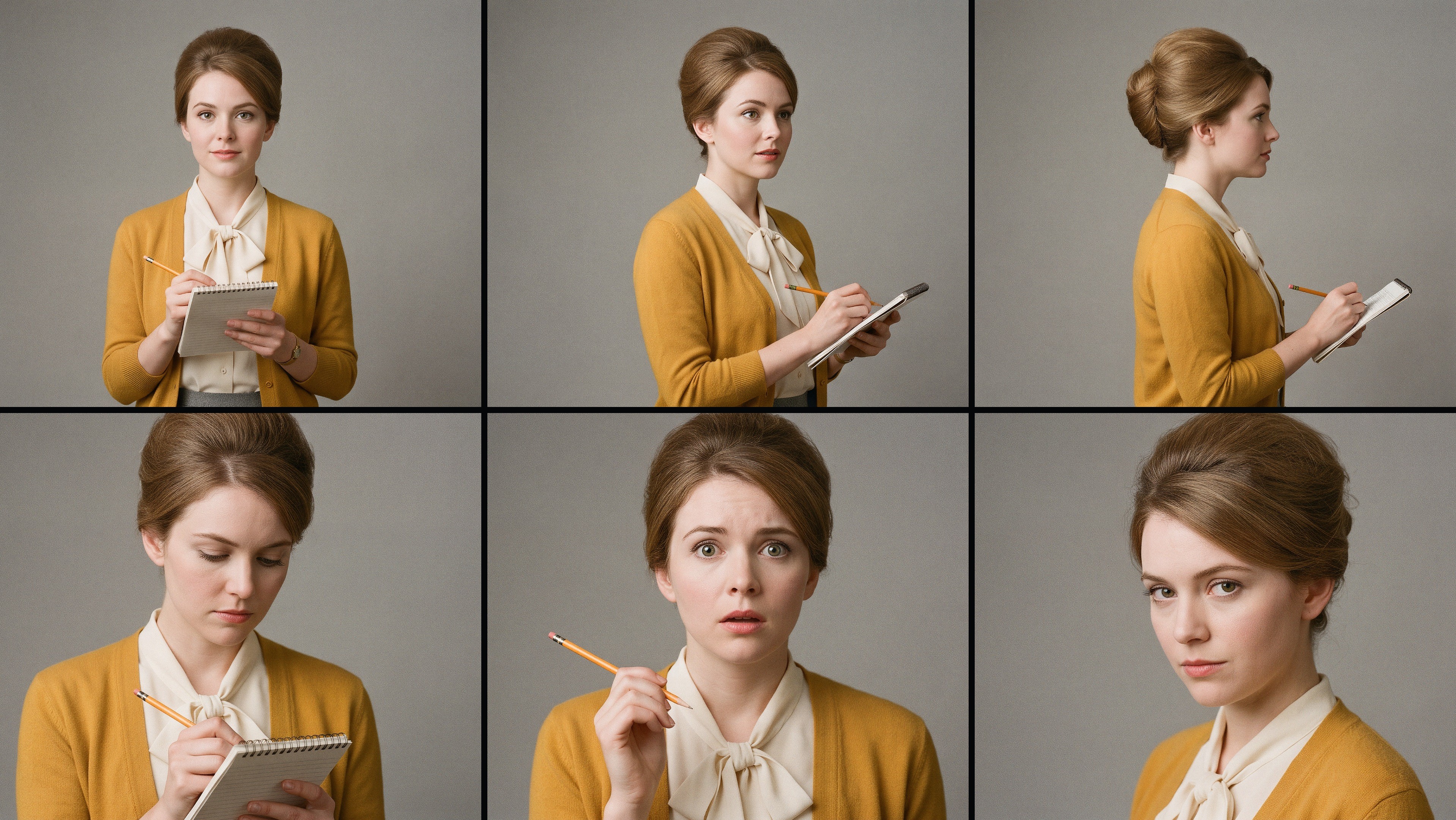
She isn’t picking a side, she is protecting the relationship: “Team… we’re meeting the client on Friday. We need to make a decision.” Every real project has a Marjorie, and every real project needs one.
So they ask Andy
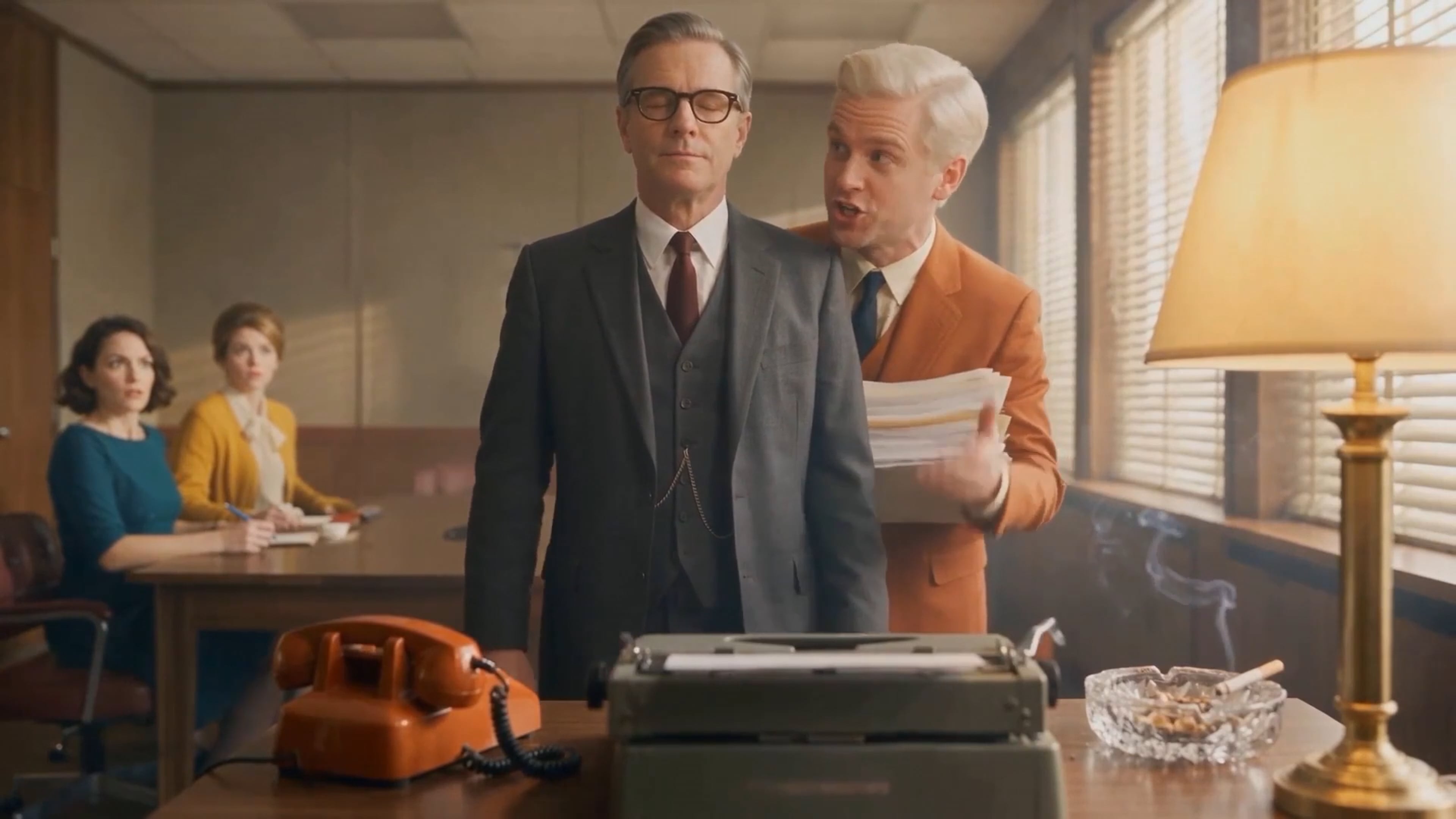
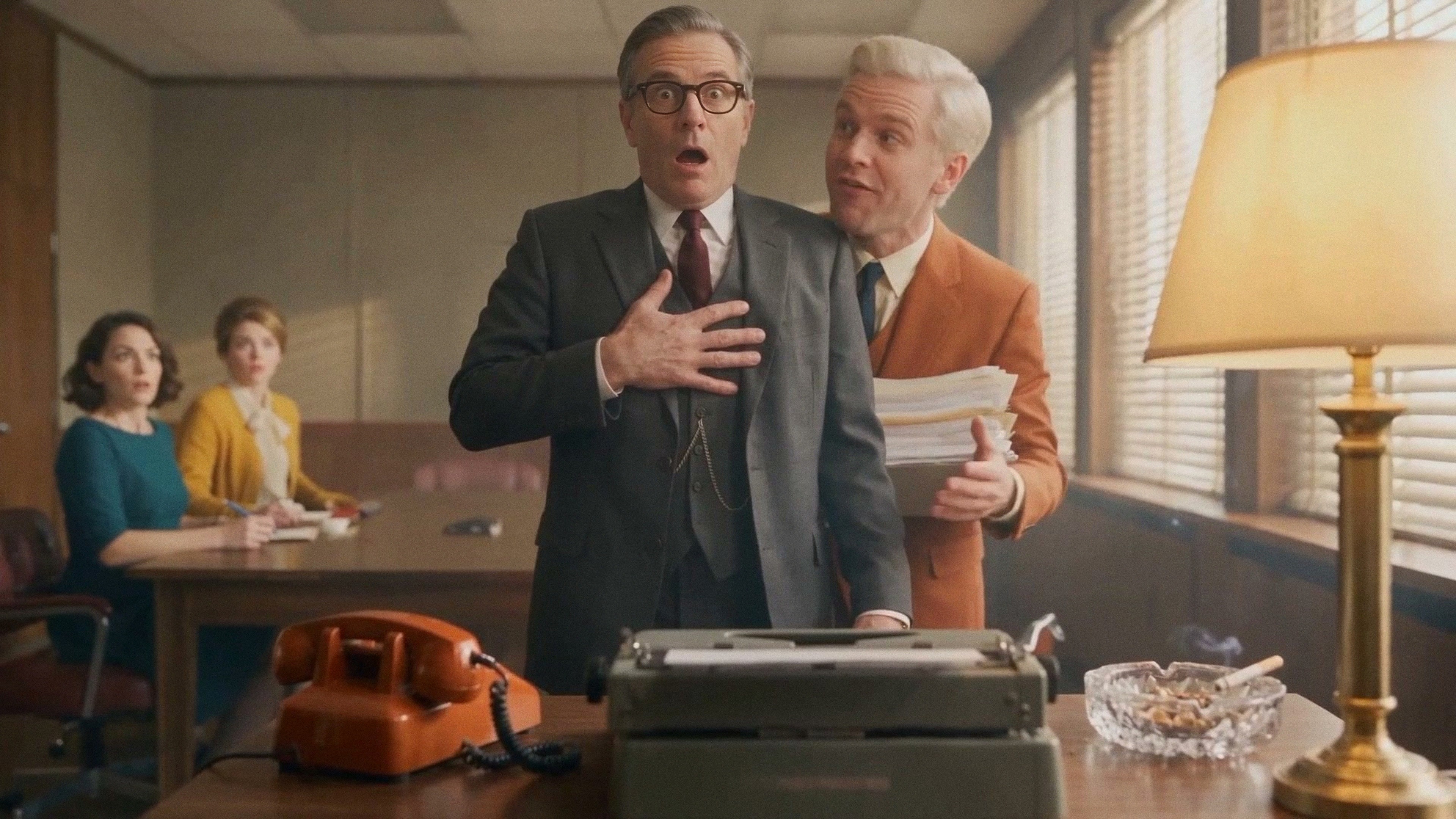
Harold does what plenty of teams do now when a decision gets uncomfortable. He outsources it. “Alright. Let’s ask Andy.” He picks up the telephone, and before he has finished dialling, Andy is already standing behind him.
Andy, the new hire
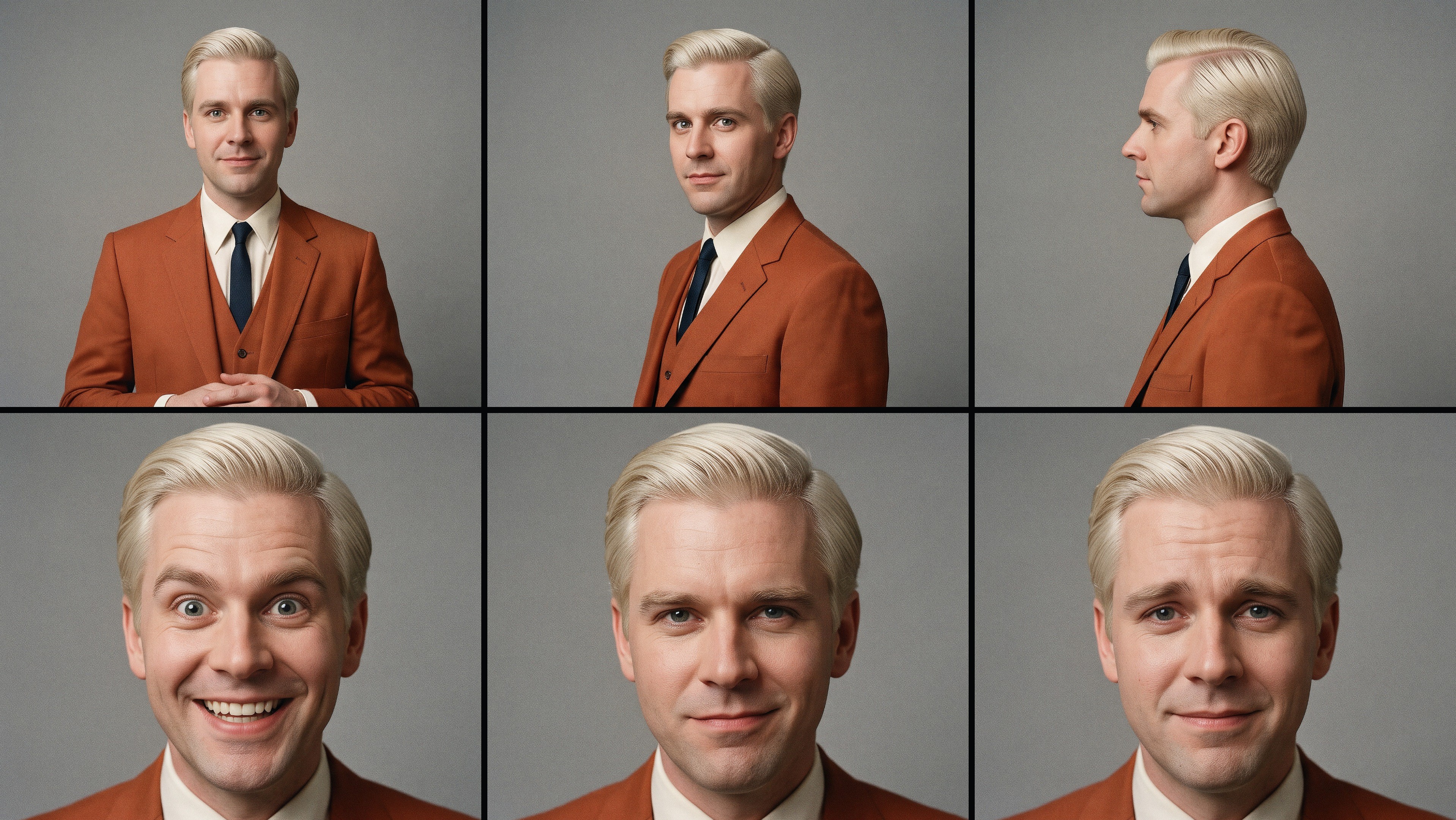
Always smiling, always available, always already finished. Andy is an AI assistant and he has the answer to everything:
Andy: “Great question! I’ve already created fifteen logo options, a mascot, a jingle, and a full rebrand roadmap.”
Harold: “But I haven’t asked you anything yet.”
Andy: “You’re absolutely right! Here’s a revised version…”
If you have used a chatbot recently, Andy will feel familiar. He answers before the question is asked, agrees with every correction, and produces more than anyone has time to read. It all sounds like branding, but none of it answers the question.
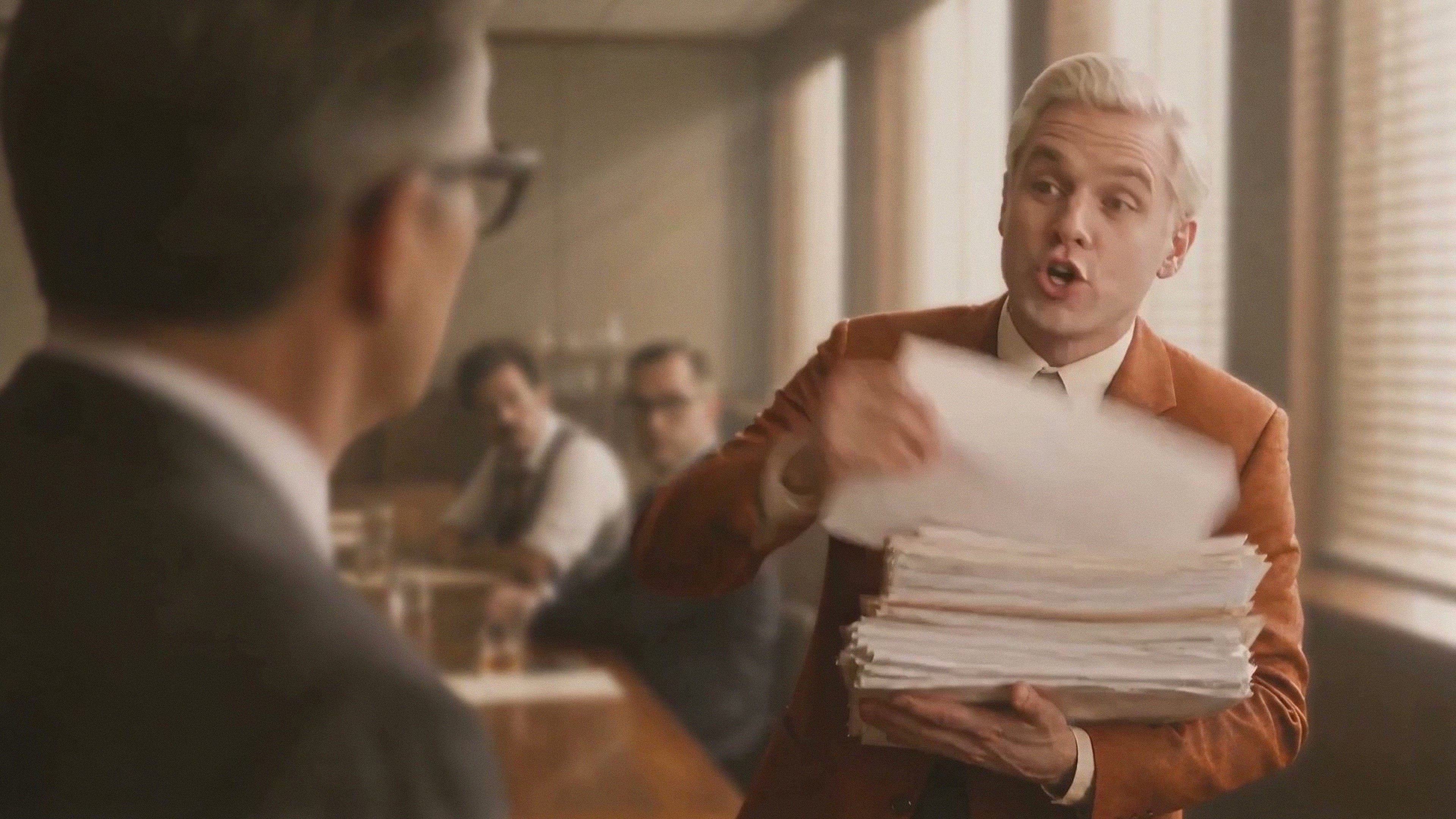
Watch the room while he talks. Frank lights a cigarette. Dot puts her pencil back in her hair. Nobody takes a single note. “…and that’s just phase one.”
Harold puts down his pen and tries one more time: “Andy. We wanted to decide on the color. Not the entire brand.” And Andy, eager, nervous, scanning the room for approval, hands the question straight back:
Andy: “Of course! Blue and terracotta are both great choices. Which one would you like to go with?”
That line sums up the film. Andy has plenty of answers, just not to the one question that was asked. He can’t weigh why terracotta might feel human or why blue might blend in. He won’t be at Friday’s meeting, and he won’t be explaining the choice to the client in three years’ time. He can generate options endlessly, but he can’t commit to one.
Then they decide to go green
Fade to black. Time cut. Frank walks into Andy’s office with an olive-green binder, drops it on the desk with a thud, and says: “We decided to go green. The client loved it. Now it’s your turn.”
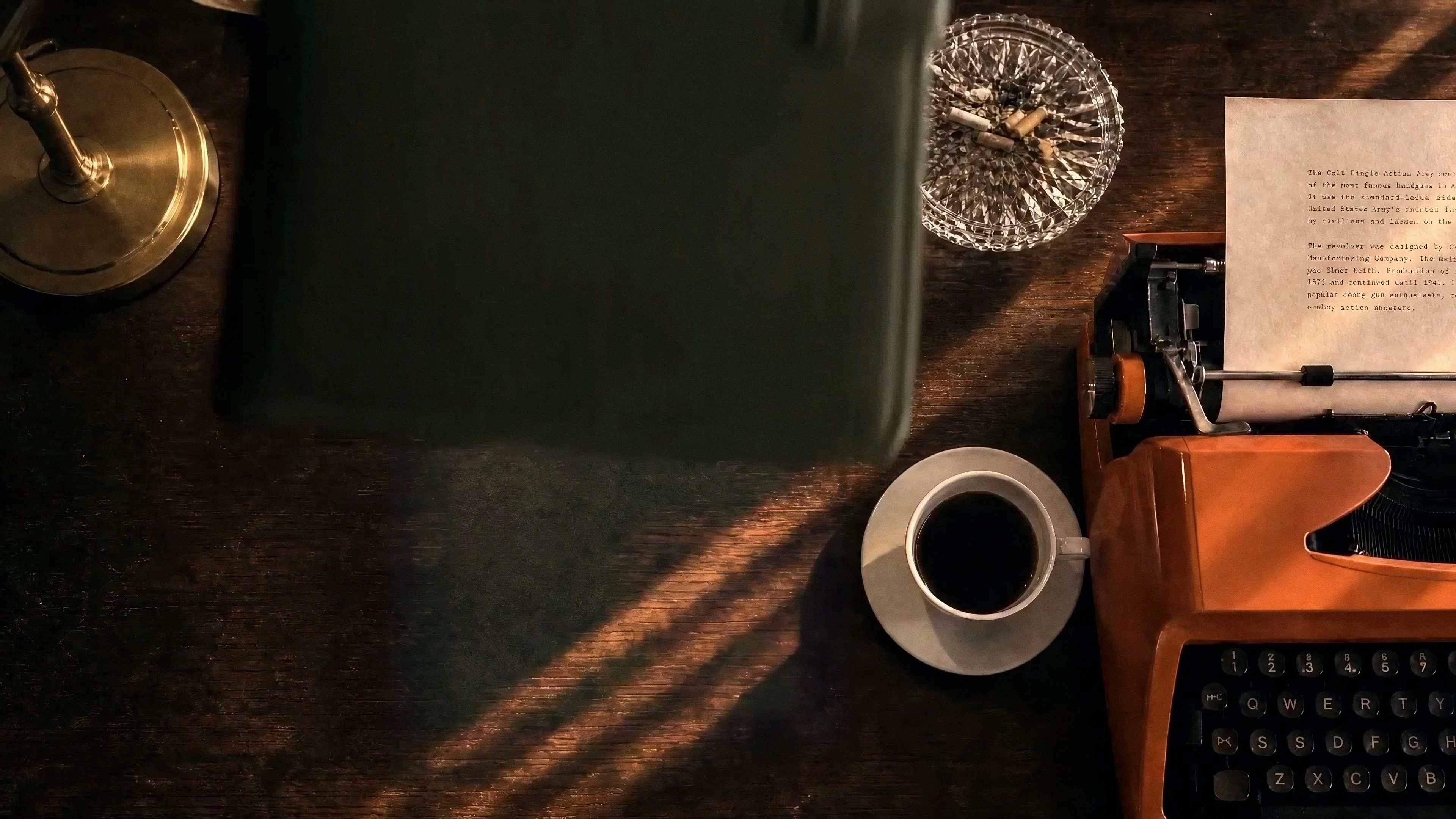
Green wasn’t one of the options. It came out of a discussion between people who each had their reasons and who had to stand behind the result. The film doesn’t show how they got there, and that feels true to life: the real work of deciding rarely looks like much from the outside.
Andy’s input didn't shape the decisions. But once he receives the brand guide, he becomes genuinely useful: taking what has already been decided and applying it everywhere, quickly and consistently.
Why we made it
Because this is how we work:
Human-crafted brands, ready for AI.
Our manifesto says it more bluntly: the danger is not that AI makes bad brands. It makes perfectly mediocre ones. We use AI every day, and we are precise about where.
- We use it to research faster than any deck cycle, generate on-brand imagery, and turn static guidelines into a system the whole stack can read.
- We never use it to define the concept or design the foundations. The core idea and the identity are decisions, and decisions need people who will defend them.
Andy isn’t the villain of this film. He is the colleague who arrived in the wrong meeting.
Made with AI, decided by people
There is an irony here: a film about AI not making decisions, where every frame was generated by AI. Which made the decisions the whole job.
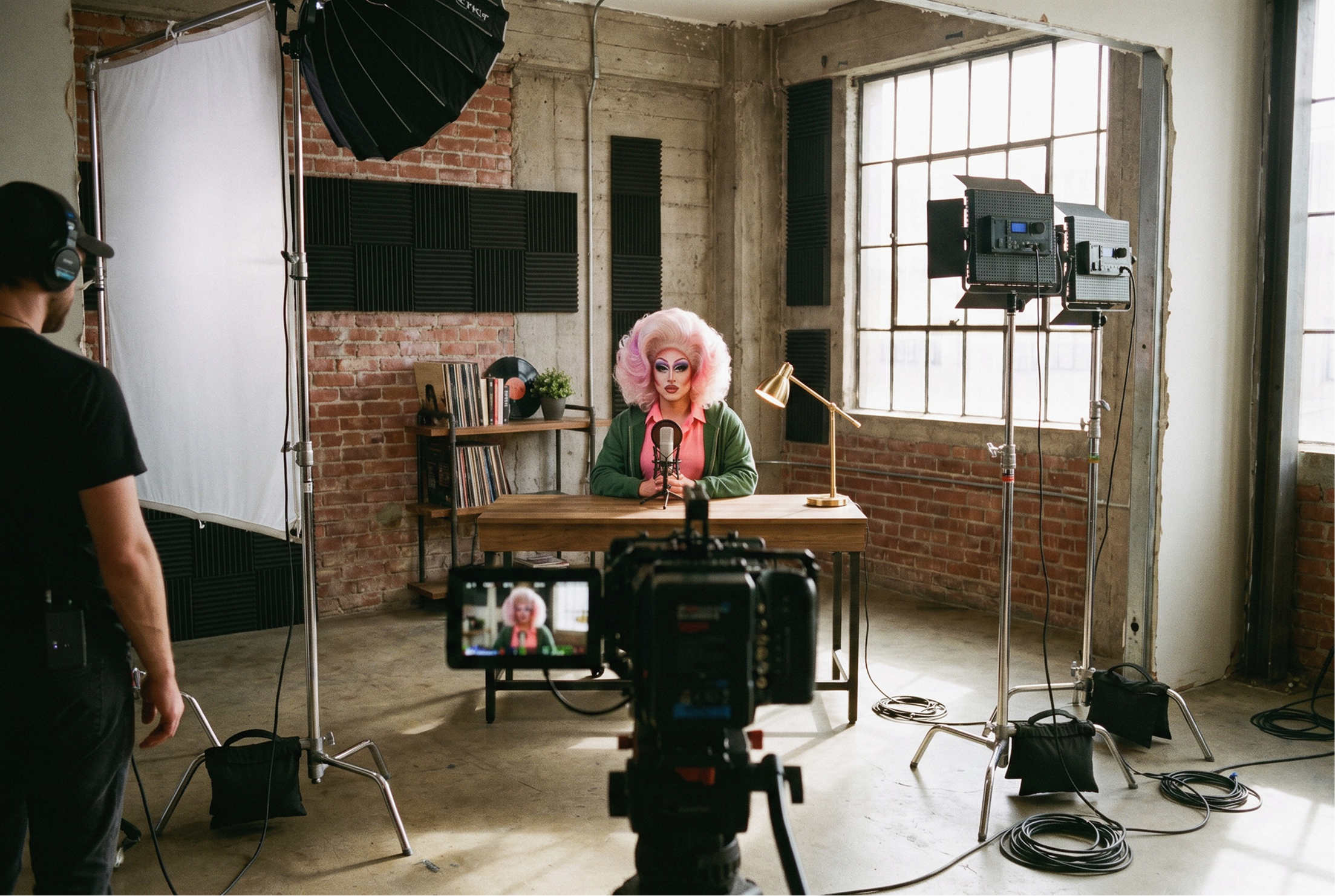
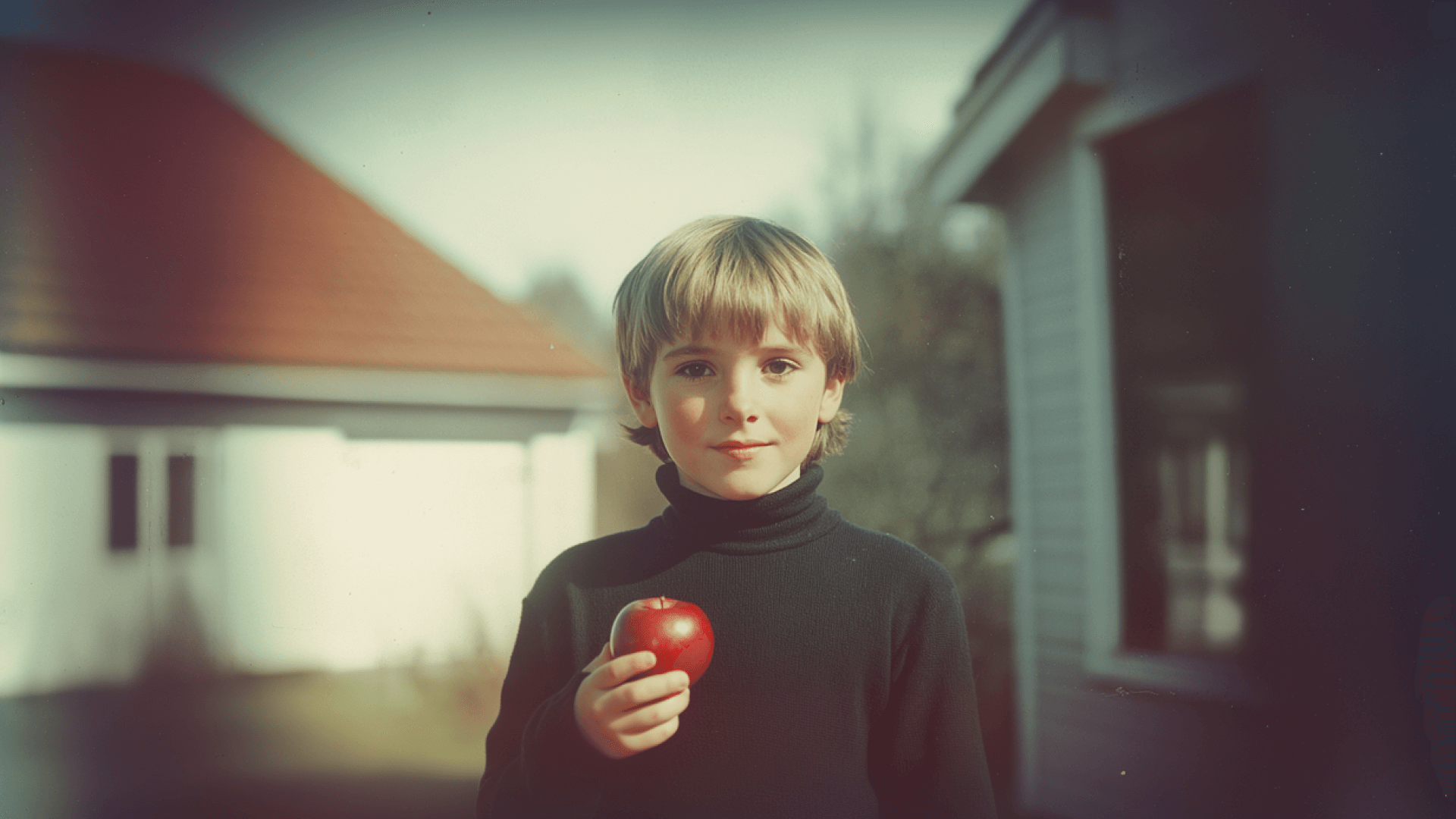
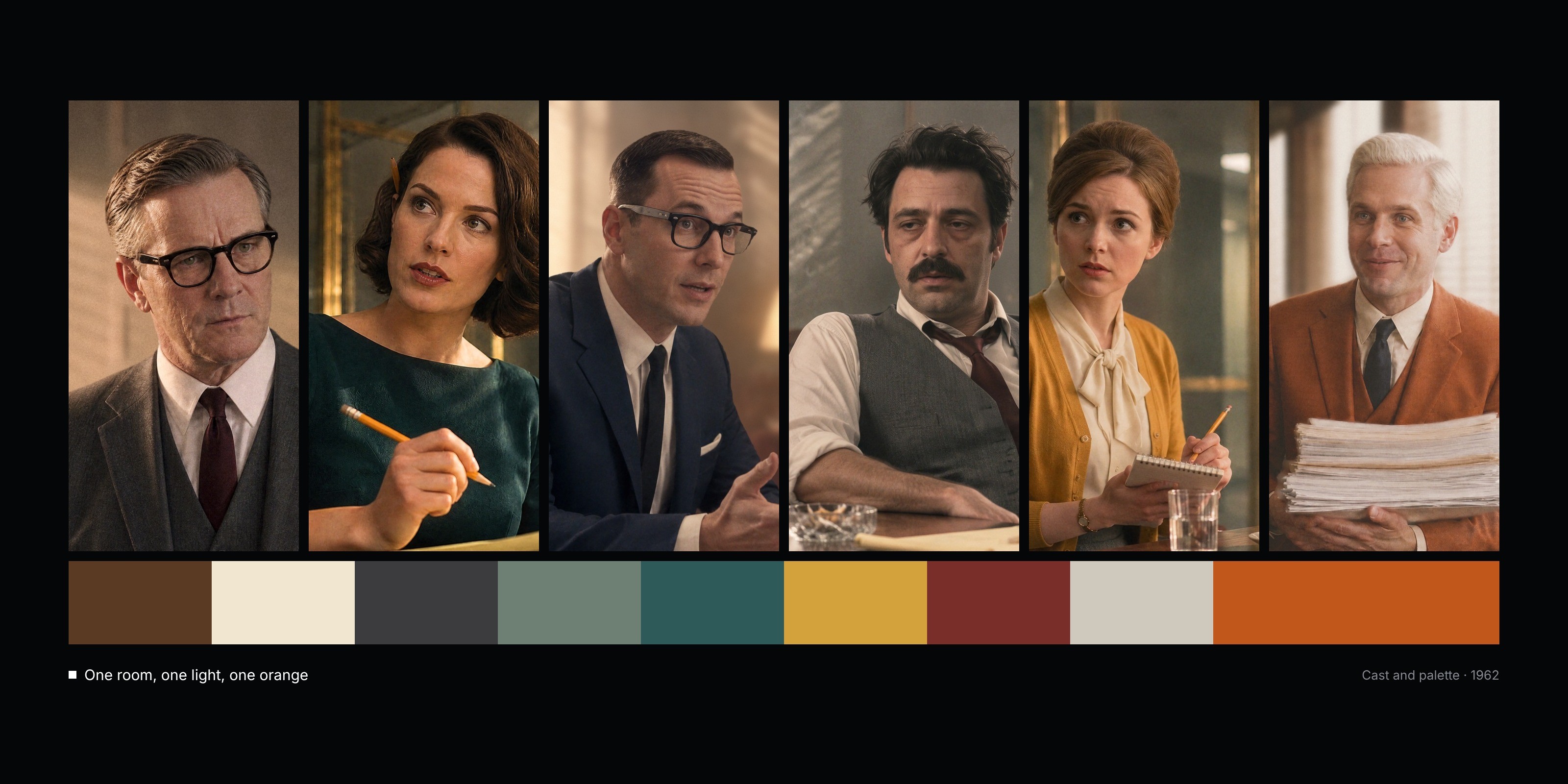
Before a single scene, each character got a casting sheet: front, three-quarter and profile, plus the expressions the script needs. Harold pinching the bridge of his nose. Eddie’s headache. Marjorie’s panic. Frank staring at the ceiling. Without them, a model gives you a slightly different Harold in every shot. With them, he stays Harold from the wide shot to the close-up.
Then the set: one boardroom seen from three sides, the glass corridor outside it, and Andy’s desk, down to the rotary phone, the ashtray and the typewriter. Fix the room, and the walls stop moving between cuts. The models did the rendering. The script, the cast, the wardrobe, the period, the timing of every pause: people chose all of it.
Our learnings from this creation
Rafa: I came into this film as a motion designer and came out of it as something closer to a director. This is what I would tell anyone starting a project like this:
Stills first, motion second. Every shot started as an approved still frame before anything moved. The first and last frames of a clip turned out to be the most precise way to direct a model: they tell it where the shot begins and where it has to land.
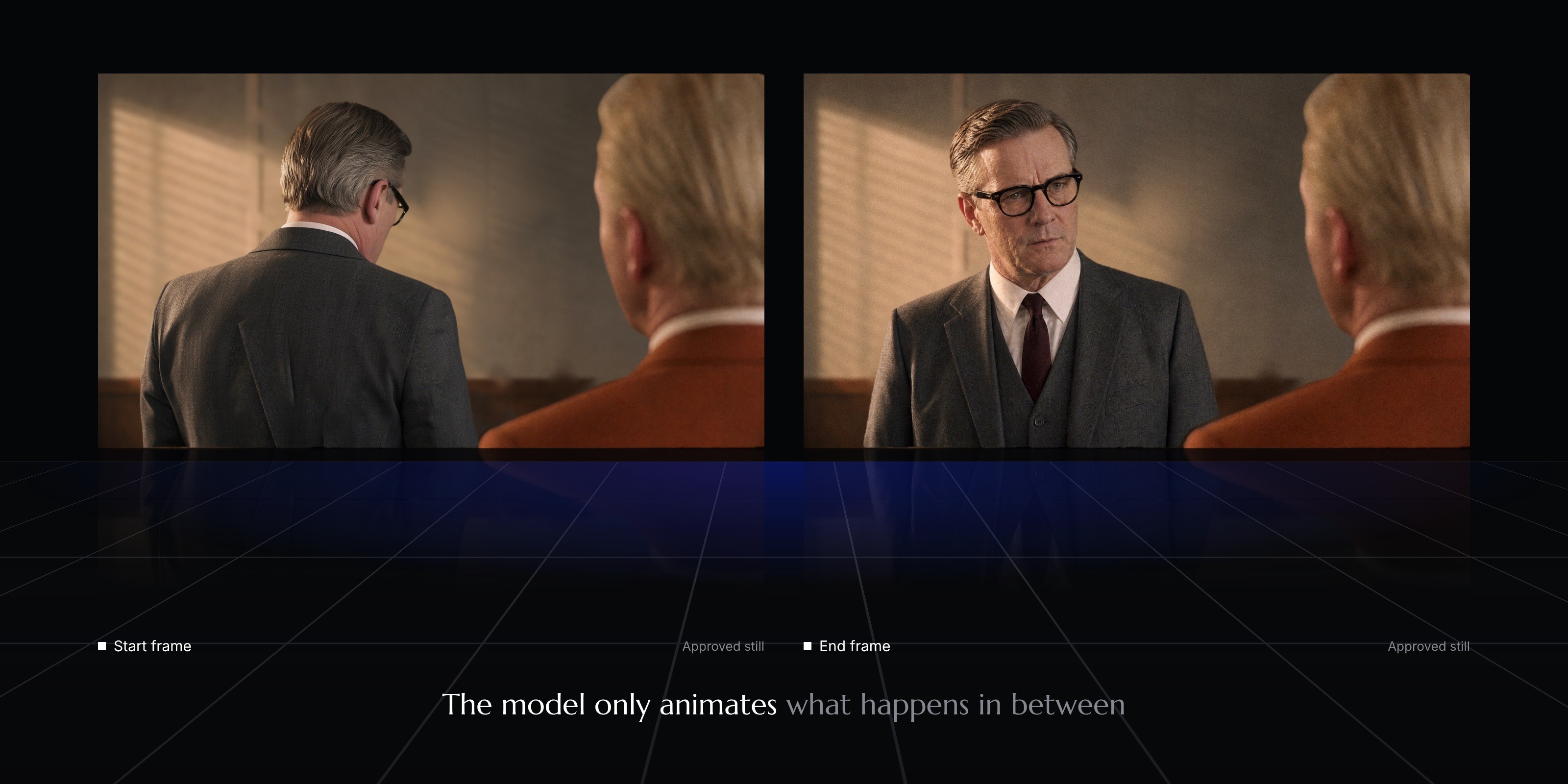
Continuity is built one clip at a time. I never moved on until the previous clip was approved, and the last frame of each one had to match the first frame of the next. You also learn to count heads: video models happily make a character vanish at the edge of the frame.
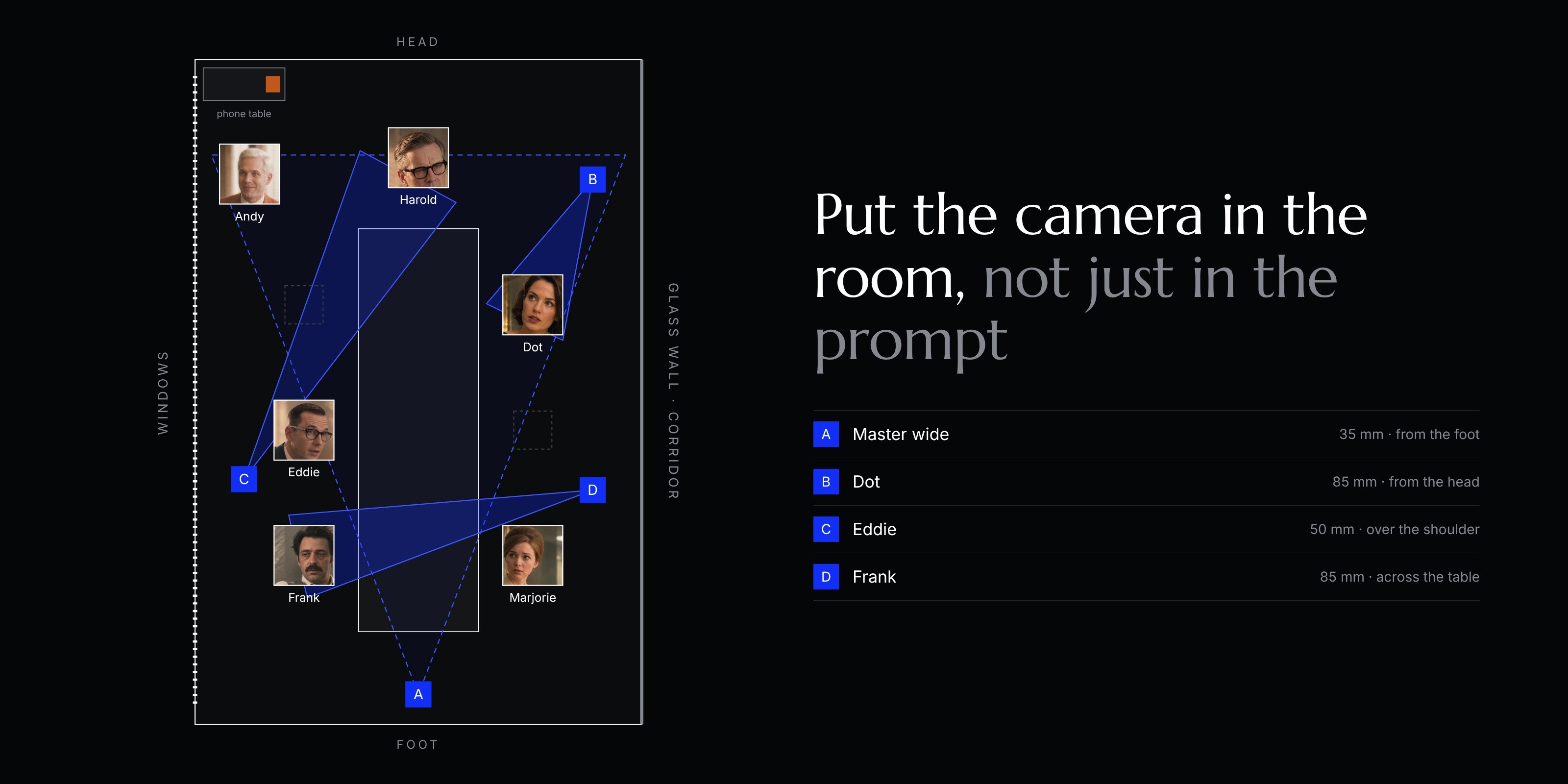
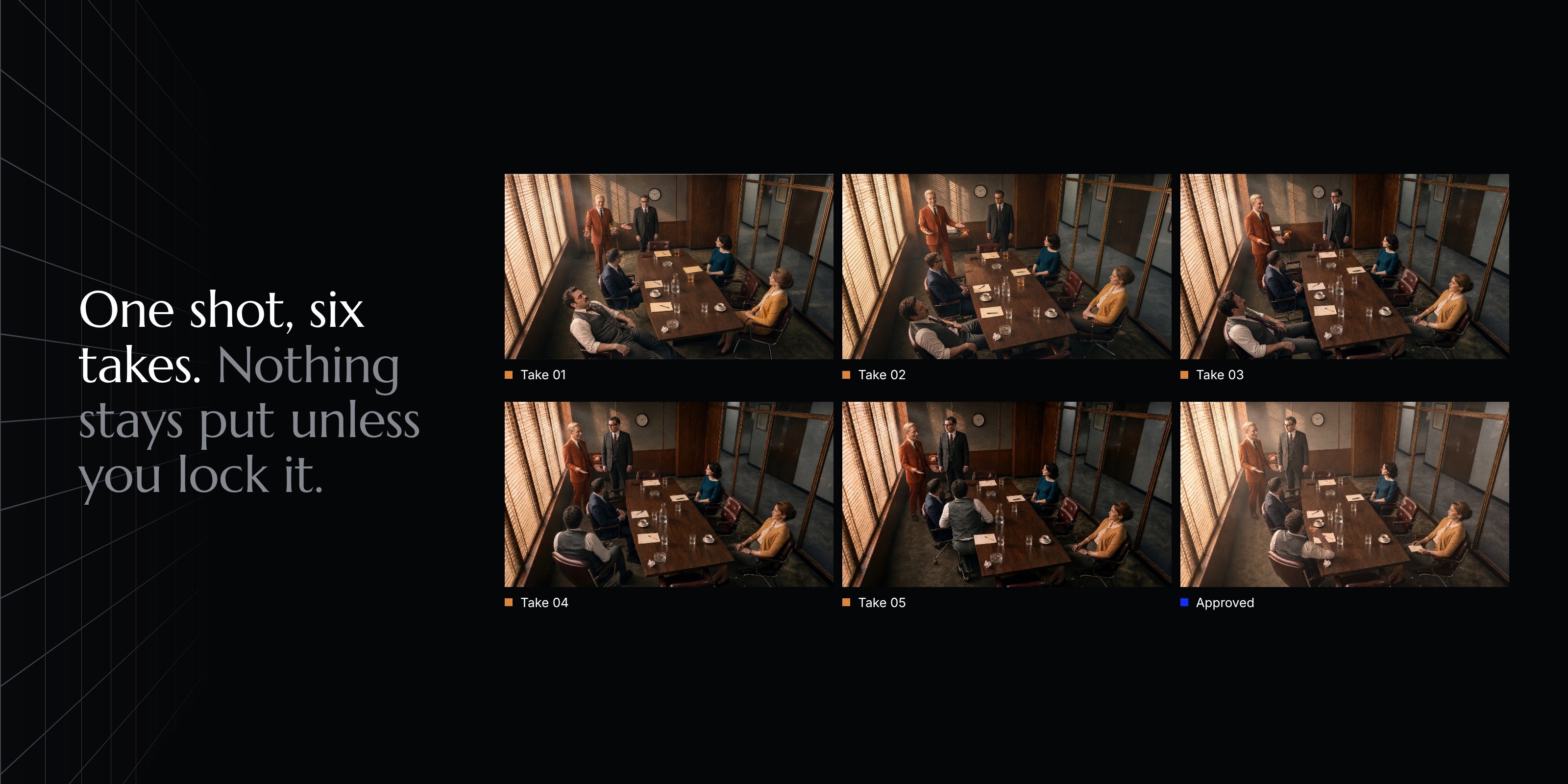
Know when to edit and when to start again. Video editing tools are good at small fixes, like removing a window behind someone. They are bad at subtle ones: Frank’s moustache came out either enormous or not at all. What worked was retouching a single frame by hand and generating the shot again from it.
Camera and timing have to be spelled out. Left alone, a model spreads the movement and the action evenly across the clip. “Hold still for two seconds, then tilt up as we fade to black” had to be asked for in so many words, and the exact moment Frank exhales was set in the edit.
Sound is half the realism. The clips were generated without music or ambience. The voices keep their breaths so they don’t sound synthetic, and the effects stay subtle: one badly placed sigh can ruin a shot.
Post-production is still handmade. Every clip came out of the model as a separate piece. Assembling them into one continuous scene, grading each shot against a single reference so the light holds from cut to cut, and building the soundtrack, from the room tone and the traffic outside to every chair creak, lighter click and rustle of paper, was done by hand in After Effects, shot by shot. AI gives you footage. Turning it into a film is still a craft.
The quality never came from the tool. It came from noticing, a hundred times over, that something wasn’t quite right, and saying exactly what.