Some still treat the em dash as (the only) proof that your favorite AI agent wrote the copy.
In 2026, the whole point isn’t about punctuation. It’s about something deeper: what a brand is built on and what it makes people feel.
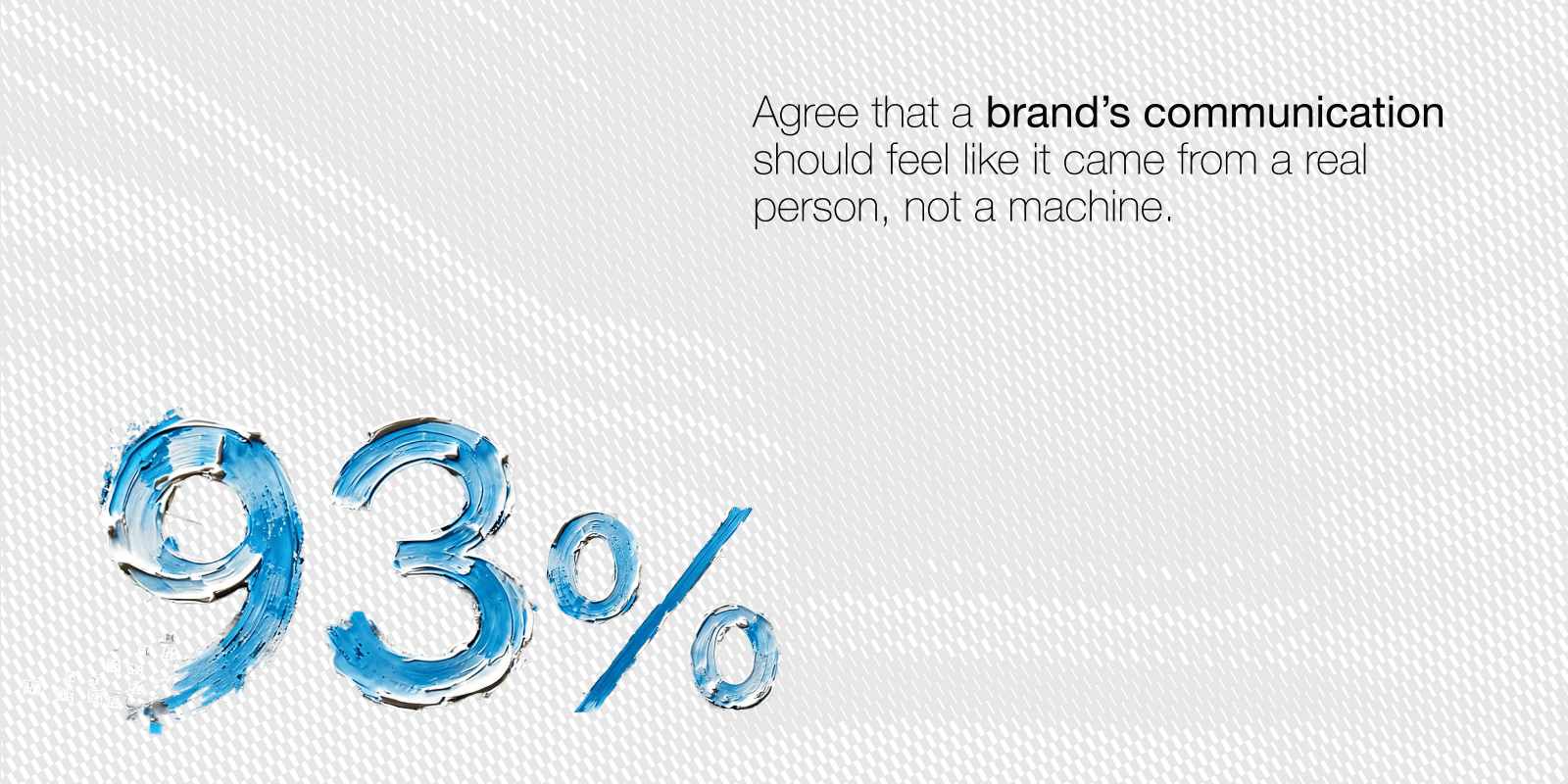
That is the ground human-centered branding fights for, and the data is on its side. A June 2026 Clutch survey of 408 consumers found that 55% view a brand less favorably once they can tell AI produced the creative, and 93% say a brand's communication should feel like it came from a real person, not a machine.
Why is branding still important in 2026?
First things first. The art of branding has always had its challenges and there have always been those who neglect its importance. In 2026, more than ever, some might think that with all the AI crawlers, having a powerful brand that backs up your business is only a luxury asset.
Experienced tech startup founders see it differently, though.
Dimitri Kassubeck, CEO at tech startup Moby Analytics, puts it plainly:
“It would be stupid to have great values and bad, bad branding."
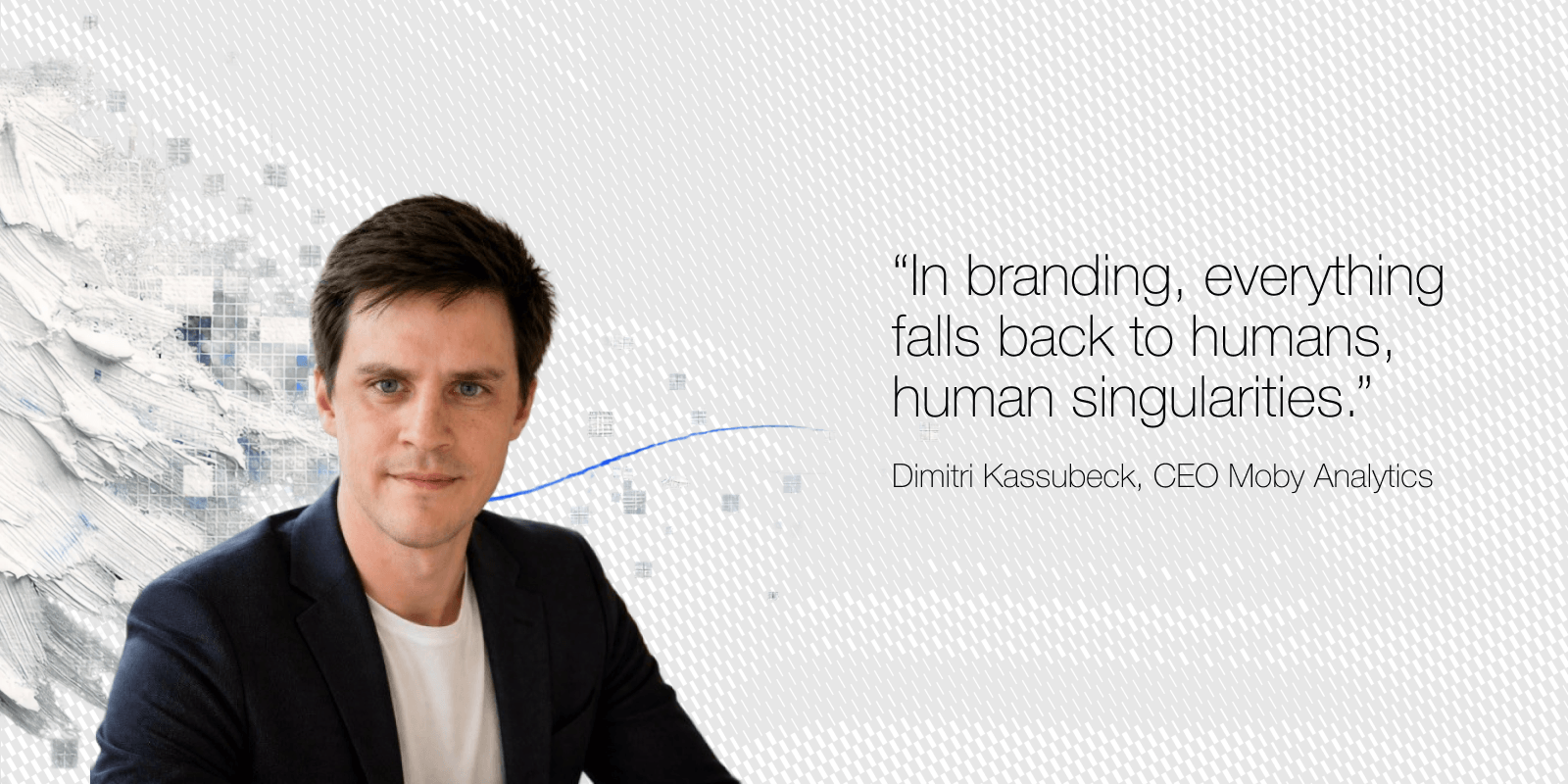
He continues: "In branding, it's about being intentional. In branding, everything falls back to humans, human singularities.”
A brand is the visible argument for why your company deserves attention. Outsource that argument to a model and you get an argument anyone could have made.
Explore AI brands that make a strong statement for the importance of branding in this article.
What are the human values a brand should communicate?
Emotional intelligence and specificity. The named, particular detail that an AI smooths over because it has no memory of it. Machines generate the average of everything they have seen. Humans remember the specific thing and know how to turn it into a feeling.
Everything you have lived shapes that instinct: the smell of citrus trees, the golden-hour light that flooded your grandma's backyard, the video game you replayed for days to clear one level.
Those signals, the weird and specific ones no prompt could predict, are what our design team protects in a brand.
Emotional intelligence is knowing what to do with them. When a designer builds a brand, they stand in the audience's shoes. Which color belongs to which moment? What does this shape make someone feel before they can explain why? How does your value land without sounding salesy?
It shows in the connection between visual and verbal identity, in the small calibrations nobody actively notices, but everybody feels. Match the energy: a playful image gets a playful voice, a serious rebrand gets a grounded one. Emotional intelligence keeps the tone honest to the moment, and that is what pulls people in.
Why has imperfection become the new perfection in branding?
Consumers stopped reading 100% perfection as proof.
For years, branded content chased flawless delivery and controlled messaging. Clutch found that consumers do not equate perfection with trustworthiness, and that more conversational content is now winning attention.
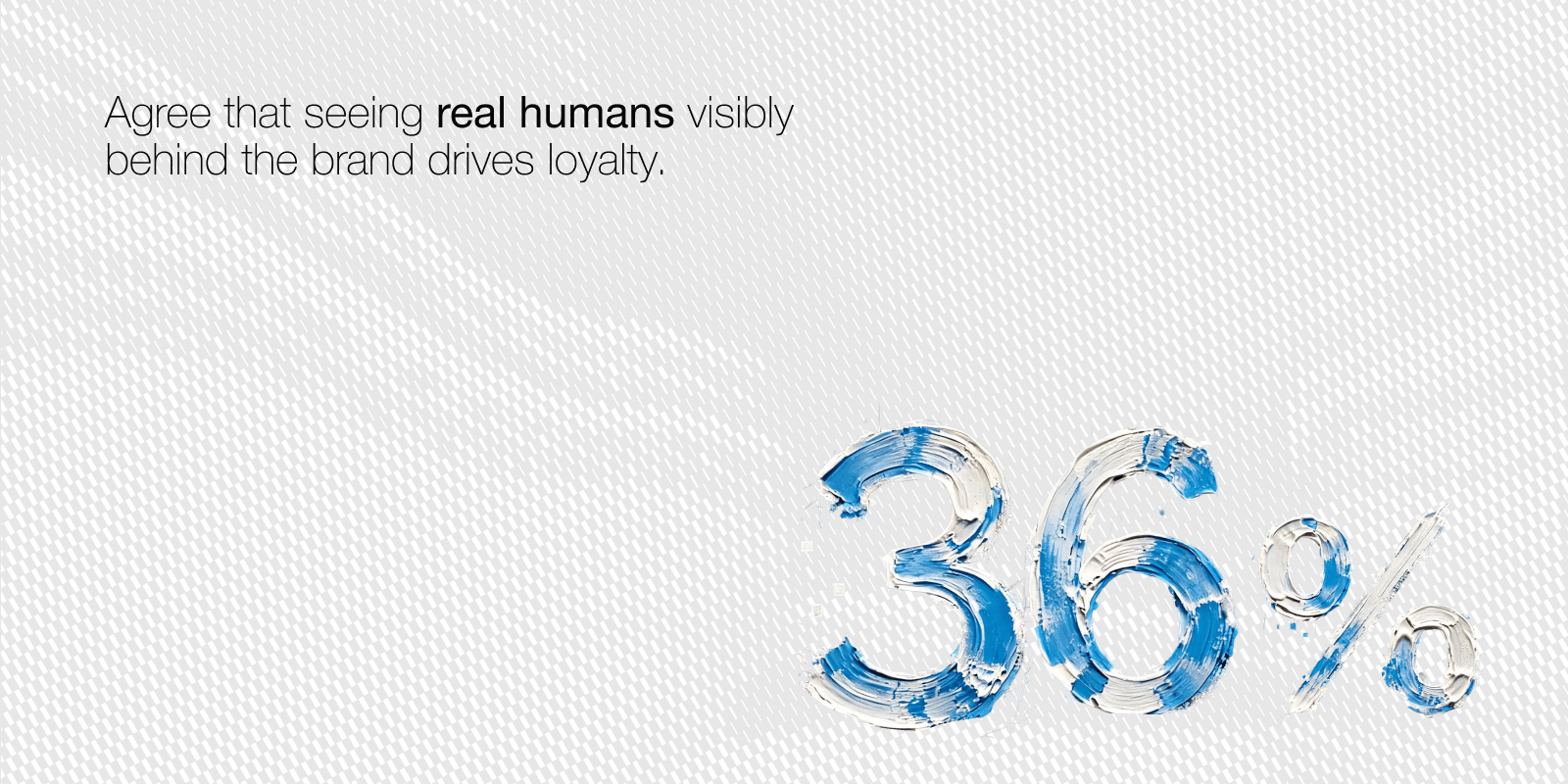
What we don’t get tired of mentioning is that branding is an important trust factor, especially for startups. And because trust is a scarce resource, companies should make the most of it. The top loyalty driver in an AI-generated world (36%) is simply seeing real humans visibly behind the brand.
In branding, copywriting, and design, that is not a permission to lower the bar. It is a brief for deliberately breaking the rules: an unfinished sentence used as a rhetorical figure, real "normal"-looking people in your photography instead of magazine-cover faces, and a founder on camera who laughs and picks the not-so-perfect headshot.
Here is where founders get it wrong in the other direction. "Human" does not mean improvised, inconsistent, or precious about every asset. Imperfect and unprofessional are not on the same axis.
Sloppy is unprofessional. A deliberate rough edge is craft. Human means the seams show on purpose.
A spelling mistake is unprofessional. An ellipsis used for timing is craft. Human means you reach for the em dash on purpose—right where it earns its place, not because a model defaulted to it.
These choices make the people behind the company visible.
They remind a reader they are dealing with humans, not bots.
And because humans trust humans, those signals have become the strongest proof of trust a brand has.
Why are human decisions the part you can't prompt?
Execution is cheap now. Judgment is not.
Design production moved from Fiverr to AI agents and got close to free. The strategic foundation and the personality behind it still need a human to argue them out.
AI is great for hitting 80% fast. But that final stretch of perfection is where the actual economic value and competitive advantage live. That final stretch is the conversation that costs you five rounds of coffee, nearly endless online meetings, and never happens with an agent: what the brand stands for, and where it should go next.
Dimitri Kassubeck puts it like this:
“I'm considering the usefulness for us to have a human designer to iterate on features. But I am not hesitating on the usefulness of design system generalities. A workshop or something like that is very valuable.”
Those decisions are the foundation of the brand system. You need them whether you scale with human designers or with LLMs, because the output is only ever as good as the input.
Aimen Chouchane, from AI company Eluviant, says the same:
"When using AI for brand work, the quality of the input matters. You need a holistic and well-thought-through design system."
Human criteria have become the premium asset. Anything a machine can do is on its way to free, and the moment something gets cheap, the value moves to whatever is still scarce. In branding, that is judgment and emotional intelligence.
There is a line in our manifesto we keep coming back to:
The more AI lowers the cost of building, the more valuable human craft becomes.
This is what happens when anyone can generate a logo in four seconds. When everyone can produce, producing is worth nothing.
How visible should the humans behind a brand be?
As visible as you can make them. Clutch found that 78% of consumers feel more favorable toward a brand when its visuals are disclosed as hand-illustrated by a human, while 55% feel less favorable when the same visuals are disclosed as AI-generated. The image did not change. The story of who made it did.
So, have we reached a turning point?
The debate was never the em dash. It was always whether a person with taste and a point of view stood behind the work. AI did not change that. It raised the price of ignoring it.
The brands worth remembering will be built on the deeply human part you cannot prompt, then scaled by a system strong enough to keep it consistent.
*Clutch survey: https://clutch.co/resources/human-centered-branding